
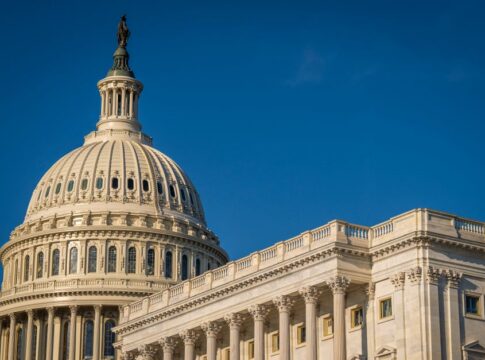
Federal Budget Process: How Congress Funds Government
By Newsroom, National Desk — Published July 29, 2026
Table of Contents
- How the Federal Budget Process Begins
- The Congressional Budget Resolution
- Appropriations: Where Spending Becomes Law
- Mandatory Spending and the Bigger Picture
- Why the Process Often Fails
- Frequently Asked Questions
Every dollar the federal government spends—from highway repairs to military salaries to Social Security checks—flows through a sprawling annual ritual known as the federal budget process. This multi-stage procedure, governed by decades of law and custom, determines how roughly $6 trillion in taxpayer money gets collected and allocated. Understanding how it works reveals much about American politics today and why Washington often seems gridlocked over spending.
The process is neither quick nor simple. It involves the president, both chambers of Congress, dozens of committees, and countless staff members working through a calendar that stretches across an entire year. When it breaks down—as it frequently does—the consequences ripple through federal government news, affecting everything from national park operations to homeland developments.
How the Federal Budget Process Begins
The Constitution grants Congress the power of the purse, but modern presidents kick off the cycle. Each February, the White House submits a budget request to Congress, a thick document outlining the administration’s spending priorities and revenue proposals for the fiscal year beginning October 1. This presidential budget is essentially a wish list. Congress can ignore it entirely, though it serves as an opening bid in negotiations that define US domestic policy for the coming year.
The request details funding levels for every federal agency and program, from the Pentagon to the National Park Service. It projects revenues based on existing tax law and any proposed changes. And it estimates the deficit—the gap between what government collects and what it spends. These projections rely on economic assumptions about growth, inflation, and employment that can prove wildly optimistic or pessimistic depending on United States current events.
Budget watchers often parse the president’s proposal for signals about priorities. A big increase for defense spending signals one set of values; major investments in infrastructure signal another. But the real power lies with Congress, where the American political system requires both House and Senate agreement before a single dollar can be spent.
The Congressional Budget Resolution
Once the president’s budget arrives, House and Senate budget committees craft a congressional budget resolution. This is not a law. The president never signs it. Instead, it functions as an internal congressional blueprint, setting overall spending and revenue targets and dividing the pie among different categories—defense, healthcare, education, and so on.
The resolution matters because it establishes limits for the committees that write actual spending bills. If the budget resolution allocates $800 billion for defense, the appropriations committees working on military funding know their ceiling. The resolution also includes instructions for mandatory spending programs like Medicare and Social Security, which operate on autopilot unless Congress changes the underlying laws.
Passing a budget resolution requires only a simple majority in each chamber, not the 60-vote threshold that most Senate legislation faces. But even this lower bar proves difficult when the parties disagree on fundamental questions about the size and role of government. Some years, Congress skips the resolution entirely and proceeds without a formal blueprint—a sign of dysfunction that complicates everything downstream.
Appropriations: Where Spending Becomes Law
The real work happens in the appropriations process, where 12 separate bills fund different slices of government. Each bill covers a distinct area: agriculture, commerce and justice, defense, energy and water, financial services, homeland security, interior and environment, labor and health, legislative branch, military construction, state and foreign operations, and transportation and housing.
House and Senate appropriations committees divide into subcommittees matching these 12 bills. Each subcommittee holds hearings, debates funding levels, and marks up legislation. The full appropriations committee then votes, followed by floor consideration in each chamber. When House and Senate versions differ—and they always do—a conference committee reconciles the differences before sending a final bill to the president.
This is where Washington DC updates turn into concrete decisions affecting US national affairs. Should border patrol get more funding? Should rail infrastructure receive new investment? Should scientific research agencies see cuts or increases? These debates reflect competing visions of federal priorities and generate intense lobbying from agencies, interest groups, and constituents.
The Continuing Resolution Fallback
Congress is supposed to pass all 12 appropriations bills by October 1, when the new fiscal year begins. It almost never does. Instead, lawmakers typically pass a continuing resolution—a temporary measure that keeps government funded at current levels for weeks or months while negotiations continue. Some years see multiple continuing resolutions strung together. This approach frustrates agency planners who cannot launch new initiatives or adjust to changing circumstances without a full-year budget.
When Congress cannot even agree on a continuing resolution, the government shuts down. Non-essential operations cease, hundreds of thousands of federal workers go without paychecks, and services from national parks to passport processing halt. These shutdowns, once rare, have become recurring features of Congressional developments in recent decades, reflecting deep partisan divides over spending and policy.
Mandatory Spending and the Bigger Picture
The 12 appropriations bills cover what budget experts call discretionary spending—roughly one-third of the federal budget. The other two-thirds flows through mandatory spending programs: Social Security, Medicare, Medicaid, food assistance, veterans benefits, and other entitlements established by permanent law. These programs spend whatever their eligibility rules require, regardless of annual appropriations.
Mandatory spending grows automatically as more people qualify or costs rise. Changing these programs requires separate legislation amending the underlying statutes, not just appropriations bills. This makes the biggest drivers of federal spending largely immune to the annual budget process, even as they consume an ever-larger share of federal resources and raise questions about long-term fiscal sustainability that dominate national economic indicators.
Interest on the national debt forms a third category—neither discretionary nor mandatory, but required nonetheless. As debt accumulates and interest rates fluctuate, these payments claim more of the budget, squeezing space for other priorities.
Why the Process Often Fails
The federal budget process was designed for a less polarized era. It assumes good-faith negotiation, shared fiscal responsibility, and basic agreement on government’s role. When those conditions evaporate, the system strains. Deadlines slip. Continuing resolutions become the norm. Omnibus bills—massive packages combining multiple appropriations bills—get rushed through with little debate.
Several factors compound the difficulty:
- Partisan divides over tax and spending philosophy make compromise harder, especially when different parties control the House, Senate, and White House
- Budget rules and procedures have grown increasingly complex, with arcane points of order and reconciliation instructions that few outside the process understand
- The sheer scale of the budget—thousands of programs, millions of line items—overwhelms even dedicated lawmakers
- Short-term political incentives favor posturing over problem-solving, with budget fights used to score points rather than allocate resources
- Mandatory spending grows on autopilot, leaving lawmakers fighting over a shrinking discretionary pool
State legislature news often mirrors these federal struggles, as governors and lawmakers nationwide grapple with similar tensions between competing priorities and limited resources. But states typically face balanced budget requirements that force harder choices than Congress confronts.
Frequently Asked Questions
What happens if Congress does not pass a budget by October 1?
Government does not automatically shut down. Congress can pass a continuing resolution to keep funding flowing at current levels while negotiations continue. Only if lawmakers fail to pass either full appropriations or a continuing resolution does a shutdown occur. During a shutdown, essential functions like national security and air traffic control continue, but many other services and offices close until funding resumes.
Can the president spend money without congressional approval?
No. The Constitution gives Congress exclusive power over federal spending. The president can request funds and propose a budget, but cannot spend a dollar without congressional appropriation. Presidents can shift some funds between accounts within limits set by law, but major spending requires legislative action. This separation of powers sits at the heart of the American political system.
How does the budget process affect Supreme Court rulings or federal agency actions?
The Supreme Court receives funding through the judicial branch appropriations bill, but its independence means budget pressures rarely influence rulings. Federal agencies depend entirely on appropriations for their operations, which gives Congress leverage over federal agency actions through spending limits, policy riders, and funding conditions. Agencies cannot pursue initiatives without the money to staff and execute them.
Why does the budget process seem more dysfunctional than in the past?
Multiple factors have made budgeting harder over recent decades. Growing partisan polarization reduces the middle ground where compromise happens. Mandatory spending has grown, leaving less discretionary funding to negotiate. The 24-hour news cycle and social media amplify conflicts and reward confrontation. Budget procedures have become more complex, with reconciliation rules and points of order creating new obstacles. And the stakes feel higher as government grows larger and touches more aspects of national life.
The federal budget process remains one of government’s most consequential activities, yet it often unfolds behind closed doors in committee rooms and late-night negotiations. When it works, it funds everything Americans expect from their government. When it fails, the breakdowns remind us that democracy requires not just rules and procedures, but also the will to make them work.