
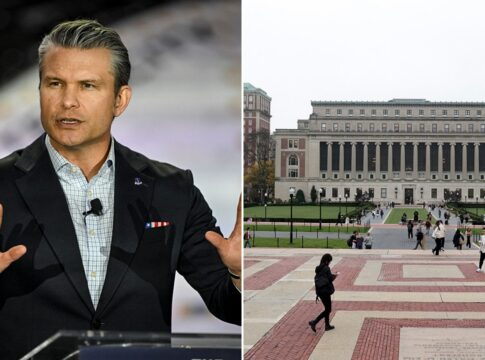
Secretary of Defense Pete Hegseth announced Friday the immediate cancellation of all Department of Defense attendance at Princeton, Columbia, MIT, Brown, and Yale universities, effective with the 2026-27 academic year, claiming these institutions have betrayed their purpose by promoting anti-American ideologies.
Elite Schools Cut Off from Military Programs
The ban extends beyond the five named universities to include what Hegseth described as other institutions that have become factories of anti-American resentment. This action follows his earlier decision this month to prohibit active-duty service members from attending Harvard. The Defense Secretary accused these schools of gorging themselves on taxpayer dollars while undermining military values and promoting what he characterized as wokeness and weakness instead of victory and strategic realism.
Hegseth stated the department would no longer subsidize institutions teaching ideologies that contradict the values military officers swear to uphold. He characterized the current educational environment at these universities as indoctrination rather than education, emphasizing the Pentagon’s refusal to continue funding programs that breed military disdain among future leaders. Fox News chief national security correspondent Jennifer Griffin reported on the universities at risk of losing Pentagon tuition assistance during Special Report coverage.
Internal Military Review Ordered
Beyond cutting ties with civilian universities, Hegseth announced a comprehensive review of the Pentagon’s own war colleges. The review aims to ensure these institutions return to their core mission of developing strategic military thought focused exclusively on creating lethal and effective warfighters. The Secretary emphasized accountability within the Defense Department itself, promising reforms to eliminate any similar ideological drift in military educational programs.
Impact on Military Education
The decision affects graduate programs traditionally used by senior military officers for advanced education. These programs have historically provided officers with exposure to academic research and civilian perspectives on national security issues. The ban represents a fundamental shift in how the Pentagon approaches officer education, prioritizing institutions the department believes align with military values. Critics may argue this limits intellectual diversity, while supporters contend it protects military culture from ideological corruption that undermines national defense capabilities.