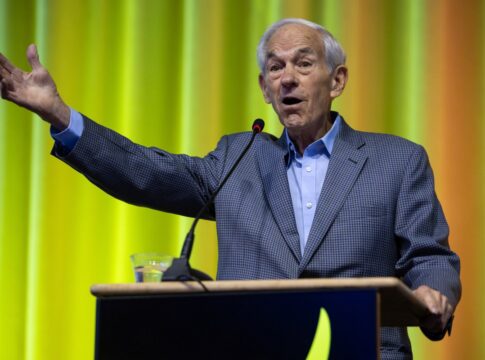
Former Texas Representative Ron Paul declared the American economy fundamentally fraudulent and headed for collapse, blaming the 1971 decision to abandon the gold standard during a 90th birthday interview on The Tucker Carlson Podcast.
Economic System Called ‘Counterfeit Money’
Paul labeled President Nixon’s 1971 break from gold-backed currency as America’s “first declaration of bankruptcy.” The longtime Republican congressman argued that decades of money printing and deficit spending have created an unstable economic foundation. “You just can’t print money and lie to the people forever,” Paul stated, calling the current monetary system “counterfeit money” that deceives American citizens about the true value of their currency.
The three-time presidential candidate warned that the current order of “special interests running things” is nearing its end. Paul connected his monetary concerns to broader issues of government overreach, arguing that the same moral principles prohibiting lying, cheating, and stealing should apply to federal institutions. His critique resonates with conservative voters concerned about inflation and unsustainable national debt levels.
Predictions From 2002 Prove Accurate
Carlson highlighted Paul’s 2002 House floor speech that predicted massive credit expansion, rising gold prices, and expanding government power. The host described Paul’s forecasts as “so precise that it’s spooky,” noting how these warnings materialized over the following two decades. Paul’s monetary skepticism stems from Austrian economic theory, which emphasizes sound money, limited government intervention, and wariness of central banking policies.
Path Forward Through Education
Despite his dire economic warnings, Paul expressed optimism about educating Americans on Austrian economics and liberty-focused principles. He emphasized that change must come through ideological means rather than violence, believing the internet enables broader public engagement with these economic concepts. Paul views the coming economic transition as both a crisis and an opportunity for advocates of constitutional government and fiscal responsibility to promote sound monetary policy.