
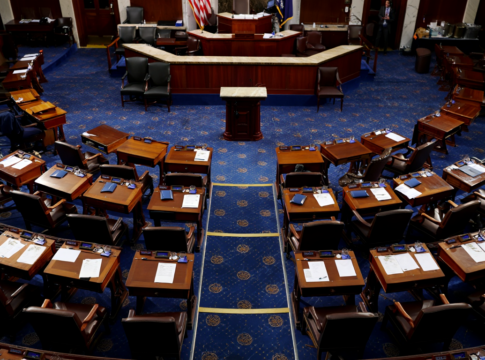
Senate Republicans defeated a Democratic resolution Wednesday that would have forced an end to military operations against Iran, marking Congress’s first major vote on a conflict that continues expanding across the Middle East without a defined conclusion strategy.
Kaine Resolution Falls Short
Senator Tim Kaine of Virginia sponsored the War Powers Resolution requiring congressional authorization for continued military action against Iran. The measure failed along party lines, with Republicans backing the Trump administration’s authority to conduct operations. The vote represents a significant constitutional test of presidential war powers, as the conflict has grown beyond initial strikes into a sustained regional military engagement involving multiple countries and no clear timeline for American withdrawal or mission completion.
House Democrats Demand Authorization
Representative Jason Crow of Colorado, a decorated combat veteran, joined House Democratic leadership in demanding formal congressional approval before continuing the Iran war. Speaker Mike Johnson held a separate news conference with Republican leadership supporting the administration’s military campaign. The constitutional dispute centers on whether the president can wage sustained war without explicit congressional authorization, a debate that has intensified as operations expand beyond Iran’s borders into neighboring territories and involve thousands of American service members deployed throughout the region.
Constitutional Stakes
Senate Minority Leader Chuck Schumer of New York has pressed for congressional oversight as the conflict widens. The War Powers Resolution gave lawmakers an opportunity to assert their constitutional role in declaring war, a power explicitly granted to Congress under Article I. Republicans argue the president has sufficient authority under existing authorizations and self-defense provisions. Democrats counter that sustained military operations require fresh congressional approval, particularly for a conflict with no articulated exit strategy. The vote establishes early Republican unity behind the Trump administration’s military policy, despite constitutional questions about prolonged engagement without formal congressional backing for what officials acknowledge has become a regional war.