A federal judge ruled Thursday that President Trump’s controversial executive order restricting mail-in voting can remain in effect for now, rejecting emergency requests from Democrats and voting rights groups to halt the directive that challenges presidential authority over elections.
Court Rules Too Early for Emergency Action
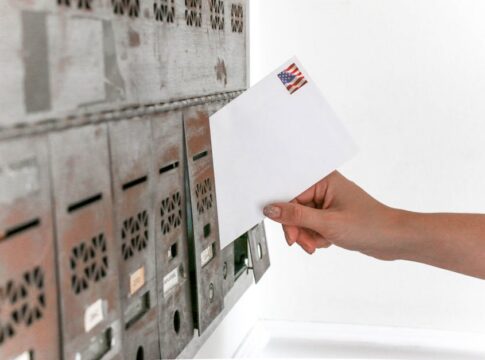
U.S. District Judge Carl Nichols, a Trump appointee in Washington D.C., determined that blocking the March 31 executive order would be premature since federal agencies have not yet implemented its key provisions. The order directs the Department of Homeland Security and Social Security Administration to create citizenship lists for state election officials, and instructs the U.S. Postal Service to develop voter eligibility lists and deliver mail-in ballots only to people on those lists.
Nichols acknowledged that legal challenges could be renewed if and when specific implementation actions directly harm individuals or groups. The judge wrote that plaintiffs cannot demonstrate the need for preliminary injunctive relief until the government takes concrete steps to carry out the order’s directives. A separate Boston-based federal judge is expected to rule on similar lawsuits in early June, with a 60-day deadline approaching in late July for potential appeals.
Constitutional Battle Over Election Authority
Nearly two dozen states, Washington D.C., Democrats, and voting rights organizations have filed five lawsuits arguing the executive order violates Article I of the Constitution. They contend that state legislatures and Congress, not the president, hold constitutional authority to establish federal election rules. The League of United Latin American Citizens leads the D.C. challenges, with attorney Danielle Lang stating the administration is attempting to unlawfully reshape the electorate and undermine confidence in election administration.
Senate Democratic leader Chuck Schumer called the order voter suppression rather than election integrity, vowing Democrats will fight to protect voting rights. The order remains controversial since Trump himself voted by mail in Florida in March. Acting Attorney General Todd Blanche told a Senate subcommittee that the Justice Department is coordinating with other agencies to implement the order’s goals, though the Postal Service has not yet issued required public notices about rulemaking processes that were supposed to begin in late May.
Uncertain Impact on Midterm Elections
The practical effect on mail-in voting for this year’s midterm primaries remains unclear. State primary elections have proceeded with mail-in voting despite the executive order. An earlier 2025 Trump voting directive was blocked by courts, adding uncertainty about whether this order will ultimately withstand legal scrutiny. Federal agencies indicated in early May court filings that they were still deliberating implementation methods. The Postal Service, an independent federal agency, has not responded to requests for comment about compliance with presidential directives.