
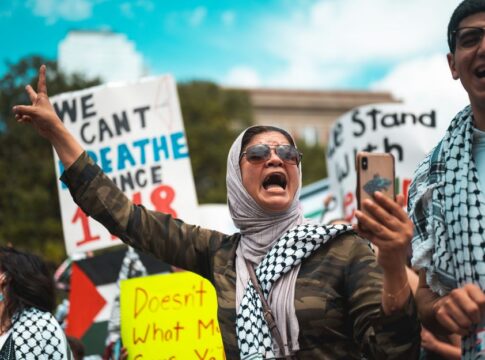
A federal appeals court has overturned a lower court decision that freed a Columbia University student from immigration detention, raising constitutional questions about free speech protections for non-citizens. The Second Circuit panel ruled that a Vermont federal judge exceeded his authority in releasing Mohsen Mahdawi, a legal permanent resident and pro-Palestinian activist, from ICE custody last year.
Court Panel Blocks Student’s Freedom
The three-judge panel, consisting of one George W. Bush appointee and two Donald Trump first-term appointees, determined on Tuesday that only an immigration court holds jurisdiction over detention challenges linked to deportation proceedings. The decision reverses U.S. District Judge Geoffrey Crawford’s 2025 ruling, which freed Mahdawi after two weeks in detention. Crawford had concluded that Mahdawi possessed the same First Amendment rights as American citizens, regardless of his non-citizen status.
Mahdawi, a 35-year-old West Bank refugee who grew up in a Palestinian camp, was arrested by masked agents in April 2025 during what he believed was a scheduled citizenship interview. He later described the appointment as a trap designed to detain him. The arrest followed an aggressive campaign led by Secretary of State Marco Rubio, who argued that Mahdawi’s activism could undermine U.S. foreign policy objectives in the Middle East.
Political Pressure and First Amendment Concerns
Rubio claimed Mahdawi’s presence in America could create adverse foreign policy consequences due to his advocacy work. The student activist co-founded Columbia University’s Palestinian Student Union and has publicly shared experiences from his childhood, including being shot in the leg by an Israeli soldier at age 15. His detention mirrors that of fellow organizer Mahmoud Khalil, another legal permanent resident who was separated from his pregnant wife and transferred to a Louisiana ICE facility last year.
The American Civil Liberties Union provided a statement from Mahdawi calling the decision a dangerous failure under political pressure. He expressed concern that the ruling creates different tiers of constitutional rights based on citizenship status, potentially empowering the government to silence dissent without meaningful judicial oversight. Despite the setback, Mahdawi stated confidence that the full court will eventually restore constitutional protections.
What This Means
The case highlights tensions between immigration enforcement, executive foreign policy priorities, and constitutional protections for legal residents. The appeals court decision suggests that non-citizens challenging immigration detention face significant jurisdictional hurdles when seeking relief in federal district courts. This ruling could establish precedent limiting where and how legal permanent residents can challenge their detention, particularly when their cases involve political speech that the executive branch considers contrary to American foreign policy interests. Most of Mahdawi’s family remains in the West Bank refugee camp where he was raised.