
Neural Networks Explained: AI Learning in Plain Terms
By Newsroom, Science & Technology Desk — Published August 15, 2026
Table of Contents
- How Neural Networks Actually Work
- From Perception to Prediction: What Neural Networks Learn
- Limitations and the Black Box Problem
- Training Data Shapes Everything
- The Road Ahead for Neural Networks
- Frequently Asked Questions
Artificial intelligence has moved from science fiction to everyday reality, powering everything from smartphone assistants to medical diagnostics. At the heart of this digital transformation sits a technology that mimics the human brain: neural networks. Understanding neural networks explained in accessible language helps demystify how machines learn, why emerging technologies sometimes succeed or fail, and what these systems can—and cannot—do as they reshape healthcare advancements, scientific research findings, and technology innovation trends across industries.
Neural networks are computational systems inspired by the biological neurons in animal brains. They learn to recognize patterns, make decisions, and improve their performance through experience rather than explicit programming. This approach has revolutionized fields from peer-reviewed research in neuroscience to practical applications in medical device approval processes, where algorithms now detect diseases in laboratory studies with remarkable accuracy.
How Neural Networks Actually Work
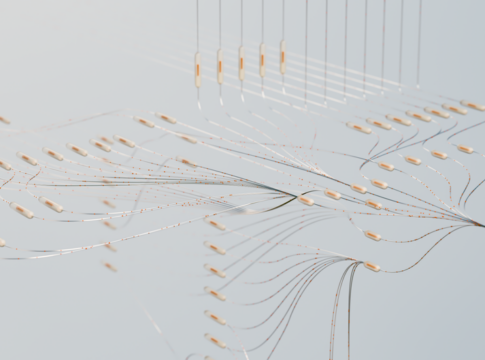
Think of a neural network as layers of simple processing units, each performing basic calculations. These units, called artificial neurons or nodes, connect to one another with varying strengths, similar to how synapses link brain cells. The network receives input data—an image, a sentence, a medical scan—and passes it through these layers, transforming it step by step until producing an output.
The magic happens during training. A network starts with random connection strengths. When shown examples—thousands or millions of them—it makes predictions, measures how wrong those predictions are, and adjusts the connection strengths to reduce errors. Over time, patterns emerge. A network trained on chest X-rays learns to distinguish pneumonia from healthy tissue. One trained on speech recognizes words. Another predicts equipment failures before they happen.
The mathematics involves calculus and linear algebra, but the concept is straightforward: repetition and correction. Each neuron receives inputs, multiplies them by weights, adds them together, and passes the result through a function that determines whether to activate. That activation becomes input for the next layer. Deep learning, a term often used interchangeably with neural networks, simply means using many layers—sometimes hundreds—to capture increasingly abstract features.
From Perception to Prediction: What Neural Networks Learn
Early layers in an image-recognition network detect edges and simple shapes. Middle layers combine these into parts—wheels, windows, facial features. Deep layers recognize complete objects: cars, buildings, specific people. The network never explicitly programs “a cat has pointed ears and whiskers.” Instead, it discovers these features through exposure to labeled examples.
This approach has driven breakthroughs in artificial intelligence and machine learning across domains:
- Healthcare advancements include diagnostic tools that spot cancerous cells in pathology slides, predict patient deterioration hours before clinical signs appear, and accelerate drug discovery by modeling molecular interactions
- Climate science benefits from neural networks that process satellite imagery to track deforestation, predict severe weather patterns, and model complex atmospheric dynamics beyond traditional equation-based approaches
- Biotechnology and genetic engineering applications use these systems to predict protein structures, a challenge that stymied researchers for decades until recent neural network architectures achieved near-experimental accuracy
- Cybersecurity and data privacy tools deploy neural networks to detect anomalous behavior indicating breaches, identify malware variants, and filter spam with evolving sophistication
- Space exploration leverages neural networks for autonomous navigation, analyzing telescope data to find exoplanets, and processing the massive datasets from instruments studying distant galaxies
The tech industry developments in natural language processing—systems that understand and generate human language—rely entirely on neural architectures. These models learn grammar, context, and even nuance without anyone teaching them explicit rules. They absorb patterns from text, much as children learn language through exposure rather than grammar lessons.
Limitations and the Black Box Problem
Neural networks are powerful, but they’re not magic. They struggle with tasks humans find trivial. A network that identifies thousands of objects might be fooled by a sticker placed on a stop sign. Another might excel at diagnosing skin cancer yet fail completely on slightly different image formats. They require enormous amounts of data and computational power, raising questions about environmental impact and accessibility.
The black box problem vexes researchers and regulators alike. A neural network with millions of parameters makes decisions through calculations distributed across its architecture. Unlike a simple rule—”if temperature exceeds 100°F, sound alarm”—neural network reasoning resists easy explanation. When a medical algorithm recommends treatment, clinicians often cannot trace why. When a hiring tool screens resumes, applicants cannot learn what factors mattered.
This opacity creates real challenges for accountability. Public health and epidemiology applications demand transparency when algorithms guide policy. Renewable energy systems need explainable predictions to earn operator trust. Medical device approval processes increasingly grapple with how to validate tools whose inner workings defy traditional testing methods. Researchers in neuroscience and brain research work on interpretability techniques, seeking to illuminate what features networks learn and how decisions form, but perfect transparency remains elusive.
Training Data Shapes Everything
A neural network is only as good as its training data. Biased data produces biased systems. If medical training sets underrepresent certain populations, diagnostic tools may perform poorly for those groups. If historical hiring data reflects discriminatory patterns, a network will learn and perpetuate them. Garbage in, garbage out applies with particular force.
Data quality matters as much as quantity. Mislabeled examples teach networks incorrect patterns. Narrow datasets create systems that fail when conditions change. A network trained on sunny-day driving footage struggles in snow. One trained on adult speech misunderstands children. Laboratory studies carefully curate training sets, but real-world deployment often encounters edge cases and distribution shifts that degrade performance.
Privacy concerns compound these challenges. Training sophisticated networks often requires vast personal data—medical records, communications, behavior patterns. Techniques like federated learning, where networks train on distributed data without centralizing it, and differential privacy, which adds noise to protect individual records, represent ongoing efforts to balance capability with ethical data use. These remain active areas in scientific research findings, with no perfect solutions yet.
The Road Ahead for Neural Networks
Current neural networks excel at pattern recognition but lack genuine understanding. They don’t grasp cause and effect, struggle with reasoning beyond their training, and cannot transfer knowledge across domains the way humans do. A network that plays chess at superhuman levels knows nothing about checkers without retraining. One that diagnoses disease cannot explain the underlying biology.
Researchers pursue architectures that might overcome these limits. Attention mechanisms let networks focus on relevant input parts, improving performance on long documents and complex images. Graph neural networks process relationships and structures, useful for molecular modeling and social network analysis. Hybrid approaches combine neural networks with symbolic reasoning, attempting to marry pattern recognition with logical inference.
Emerging technologies in quantum computing may eventually accelerate training, though practical quantum neural networks remain speculative. Neuromorphic hardware mimics biological neural structures more closely than conventional chips, potentially enabling more efficient, brain-like computation. Whether these paths lead to artificial general intelligence—systems with human-like versatility—remains hotly debated.
Frequently Asked Questions
How are neural networks different from traditional computer programs?
Traditional programs follow explicit instructions written by programmers: if this condition, then that action. Neural networks learn patterns from examples instead. Programmers design the network architecture and training process, but the network itself discovers how to map inputs to outputs by adjusting millions of internal parameters. This makes them excellent for tasks like image recognition where writing explicit rules would be impossibly complex, but also less predictable and harder to debug than conventional code.
Do neural networks actually work like the human brain?
Only loosely. Both use interconnected processing units that strengthen or weaken connections based on experience. But biological neurons are vastly more complex than artificial ones, employing chemical signals, intricate timing dynamics, and architectural features we don’t fully understand. Real brains learn from far fewer examples, transfer knowledge fluidly across tasks, and consume a fraction of the energy. Neural networks borrow inspiration from neuroscience but remain crude approximations. They’re useful tools, not digital brains.
Why do neural networks need so much data to train?
Neural networks have enormous numbers of parameters—connections between neurons—that must be tuned. A modern image classifier might have tens of millions. Each parameter needs adjustment through exposure to examples. With too little data, networks memorize training examples rather than learning general patterns, a problem called overfitting. They perform perfectly on training data but fail on anything new. Massive datasets help networks discover robust patterns that generalize. Techniques like data augmentation and transfer learning help when data is scarce, but data hunger remains a fundamental challenge.
Can neural networks be biased, and how do we fix that?
Absolutely. Neural networks learn from data, so biases in training data become biases in the system. If loan approval data reflects historical discrimination, a trained network perpetuates it. If medical images predominantly show one demographic, diagnostics may fail for others. Fixing bias requires diverse, representative training data, careful testing across populations, and sometimes algorithmic adjustments that explicitly promote fairness. But defining fairness itself proves complicated—equal treatment, equal outcomes, and equal error rates across groups can conflict mathematically. Bias mitigation remains an active research area with no simple solutions.
Neural networks represent a fundamental shift in how we build intelligent systems. Rather than encoding human knowledge in rules, we create architectures that discover patterns through experience. This approach has unlocked capabilities once thought decades away, from real-time language translation to protein folding prediction. Yet these systems remain tools—powerful, sometimes opaque, occasionally brittle—that require thoughtful deployment, ongoing scrutiny, and realistic expectations about what pattern recognition can and cannot achieve.