
Quantum Computing Basics: What Citizens Should Know
By Newsroom, Science & Technology Desk — Published August 17, 2026
Table of Contents
- How Quantum Computing Actually Works
- Where Quantum Computing Intersects Daily Life
- The Current State of the Technology
- What Citizens Need to Watch
- Frequently Asked Questions
Quantum computing basics are no longer confined to theoretical physics journals and university laboratories. This technology is moving from scientific research findings into real-world applications that will reshape healthcare advancements, digital transformation, and emerging technologies across every sector. Understanding the fundamentals now—before quantum systems become widespread—helps citizens grasp both the opportunities and the risks ahead.
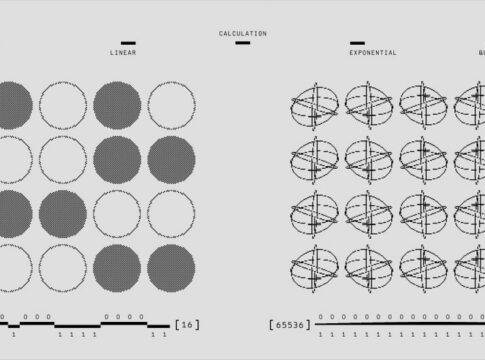
At its simplest, a quantum computer processes information differently than the laptop or smartphone you’re using right now. Classical computers store data as bits that are either zero or one. Quantum computers use quantum bits, or qubits, which can exist in multiple states simultaneously. That difference sounds abstract, but it translates into computational power that could crack encryption systems, accelerate laboratory studies for new drugs, or optimize energy grids in ways today’s machines simply cannot.
How Quantum Computing Actually Works
The core principle is superposition. A qubit can be zero, one, or both at once until measured. Think of flipping a coin: while it spins in the air, it’s neither heads nor tails but exists in both possibilities. Qubits harness that in-between state to perform many calculations in parallel.
Entanglement is the second key concept. When qubits become entangled, the state of one instantly influences the state of another, no matter the distance between them. This allows quantum computers to process interconnected variables far more efficiently than classical systems that must evaluate each possibility sequentially.
These machines operate at temperatures near absolute zero—colder than outer space—because qubits are extraordinarily fragile. A stray vibration, electromagnetic interference, or even a cosmic ray can cause errors. Maintaining coherence, the stable quantum state necessary for computation, remains one of the field’s biggest engineering challenges. Current systems can hold coherence for only fractions of a second, though technology innovation trends show steady improvement.
Where Quantum Computing Intersects Daily Life
The most immediate public concern is cybersecurity and data privacy. Much of today’s encryption relies on the difficulty of factoring large numbers—a task that would take classical computers centuries. A sufficiently powerful quantum computer could solve these problems in hours, rendering current security protocols obsolete. Governments and tech industry developments are racing to deploy quantum-resistant encryption before that threshold is crossed.
Healthcare advancements offer a more optimistic angle. Drug discovery involves simulating how molecules interact, a calculation that grows exponentially complex with each additional atom. Quantum systems could model these interactions directly, potentially shortening the timeline from laboratory studies to medical device approval. Peer-reviewed research has already demonstrated proof-of-concept simulations for small molecules, and scaling up could transform how we develop treatments for cancer, Alzheimer’s, and rare genetic disorders.
Climate science and environmental research could benefit from quantum modeling of atmospheric chemistry and carbon capture processes. Renewable energy and clean technology systems—solar panel efficiency, battery storage chemistry, grid load balancing—all involve optimization problems where quantum algorithms show promise. The same applies to artificial intelligence and machine learning: training complex neural networks faster could accelerate progress in everything from autonomous vehicles to medical diagnostics.
The Current State of the Technology
No quantum computer today can outperform classical supercomputers on practical, real-world tasks. The term “quantum advantage” describes the point where quantum systems solve useful problems faster than any conventional machine. Researchers have demonstrated this for narrowly designed benchmarks—problems invented specifically to favor quantum approaches—but not yet for applications that matter to businesses or governments.
Several technology paths are competing:
- Superconducting qubits: The most mature approach, used by several major tech companies, but requiring extreme cooling and vulnerable to errors.
- Trapped ions: More stable and precise but harder to scale to large numbers of qubits.
- Topological qubits: A theoretical design that would be inherently error-resistant but not yet demonstrated in practice.
- Photonic systems: Using light particles that can operate at room temperature but face different engineering hurdles.
Each has trade-offs between qubit quality, scalability, and operational complexity. No consensus exists on which will dominate, and the winning approach may vary by application.
What Citizens Need to Watch
Public policy hasn’t caught up. Quantum computing raises questions about national security, economic competitiveness, and equity. If only a handful of nations or corporations control the technology, they could gain decisive advantages in biotechnology and genetic engineering, space exploration and astronomy data analysis, or financial modeling. International frameworks for governing quantum research remain underdeveloped.
Workforce implications deserve attention. The field requires expertise in physics, computer science, and electrical engineering—skills in short supply. Educational systems will need to adapt, and communities should ask whether training programs are accessible or concentrated in elite institutions. The digital transformation quantum enables could widen existing inequalities if deployment is uneven.
Neuroscience and brain research might eventually intersect with quantum theories of consciousness, though such ideas remain speculative and controversial within the scientific community. More concrete are applications in public health and epidemiology, where quantum simulations could model disease spread or protein folding related to infectious agents.
Citizens should also understand that quantum computing won’t replace classical computers. Most everyday tasks—word processing, streaming video, browsing the web—don’t benefit from quantum approaches. These systems will function as specialized accelerators for specific problem types, much like graphics processors handle certain calculations today. The infrastructure will likely be cloud-based, with users accessing quantum resources remotely rather than owning quantum devices.
Frequently Asked Questions
When will quantum computers become widely available?
Timelines vary widely depending on the application. Specialized uses in drug discovery and materials science may see practical quantum tools within five to ten years. Broader deployment for general business problems likely remains a decade or more away. The technology is advancing, but significant engineering obstacles persist. Claims of imminent breakthroughs should be viewed cautiously, as the field has a history of overpromising timelines.
Will quantum computers break all current encryption?
Not immediately, and not all types. Quantum algorithms threaten public-key cryptography used for secure communications and digital signatures, but symmetric encryption remains more resistant. Governments and standards bodies are already developing and testing quantum-resistant algorithms. The transition will take years, and organizations handling sensitive data should begin planning now. The real risk is “harvest now, decrypt later” attacks, where adversaries collect encrypted data today to break it once quantum systems mature.
Can I invest in quantum computing technology?
Several publicly traded companies are developing quantum systems or components, and investment funds focused on emerging technologies include quantum holdings. However, the field is speculative and volatile. Many startups may not survive, and it’s unclear which technical approaches will prove commercially viable. Anyone considering investment should treat it as high-risk and consult financial advisors. The hype cycle around quantum has attracted both legitimate innovators and exaggerated claims.
How does quantum computing relate to quantum encryption?
They’re distinct but related. Quantum computing uses quantum mechanics for calculation. Quantum encryption, or quantum key distribution, uses quantum properties to create theoretically unbreakable communication channels. A quantum computer can’t break quantum encryption—in fact, the former creates the need for the latter. Both technologies are developing in parallel, and understanding one helps contextualize the other, but they serve different purposes and face different technical challenges.
Quantum computing represents a fundamental shift in how we process information, with implications spanning from the medications in your cabinet to the security of your bank account. The technology remains in development, but its trajectory suggests citizens should understand the basics now. Informed public engagement—asking questions about access, governance, and societal impact—will help ensure these powerful tools serve broad interests rather than narrow ones. The decisions made in the next few years will shape how this technology integrates into society for decades to come.