
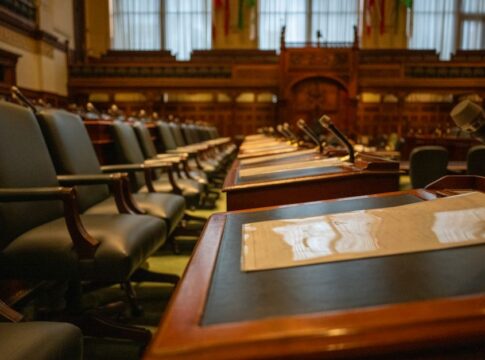
Congressional Committees: How Bills Move Through Congress
By Newsroom, Politics & Policy Desk — Published August 13, 2026
Table of Contents
- Why Congressional Committees Exist and How They’re Structured
- The Committee Gauntlet: From Introduction to Markup
- Power Dynamics and Strategic Bottlenecks
- Conference Committees and Reconciliation
- Oversight: The Other Committee Function
- Frequently Asked Questions
Most Americans know that Congress makes laws, but far fewer understand the labyrinth those laws must navigate before ever reaching a vote on the House or Senate floor. The secret to that journey lies in congressional committees—specialized panels where the real work of shaping government legislation happens, often far from public view. These committees act as gatekeepers and workshops, determining which ideas advance toward becoming law and which die quietly in folders marked “no further action.” Understanding how congressional committees process bills reveals not just the mechanics of lawmaking, but the political strategy, coalition building, and governance issues that define whether policy reform succeeds or stalls.
Committees don’t just review legislation; they fundamentally reshape it. A bill introduced with fanfare can emerge from committee unrecognizable, transformed by amendments, merged with competing proposals, or stripped of its most ambitious provisions. This is where regulatory frameworks get written, where voter legislation gains or loses key protections, and where policy implementation details are hammered out line by line.
Why Congressional Committees Exist and How They’re Structured
Congress receives thousands of bills each session. Without some filtering mechanism, the full House and Senate would drown in proposals ranging from the trivial to the transformative. Committees solve this problem by dividing labor. Each committee claims jurisdiction over specific policy areas—agriculture, armed services, education, energy, finance, foreign relations, and so on.
The House maintains roughly twenty standing committees, while the Senate operates with sixteen. These permanent bodies handle most legislation. Both chambers also create select committees for special investigations and joint committees that draw members from both House and Senate to coordinate on issues like taxation or the Library of Congress.
Committee assignments matter enormously. A representative from a farming district will seek a seat on the Agriculture Committee. Someone with presidential ambitions might angle for Foreign Affairs or Armed Services. Party leaders make these assignments, balancing member requests against the need to staff committees with enough votes to advance the political agenda. Seniority still carries weight—veteran lawmakers typically chair committees or claim ranking minority positions.
Within each committee, subcommittees handle even narrower slices of policy. The House Financial Services Committee, for instance, operates subcommittees on housing, monetary policy, and consumer protection. This structure allows members to develop genuine expertise, though it also creates fiefdoms where a handful of legislators wield outsized influence over specific regulatory frameworks.
The Committee Gauntlet: From Introduction to Markup
When a member introduces a bill, the parliamentarian refers it to the appropriate committee based on its subject matter. Sometimes jurisdiction is clear. A bill reforming Social Security goes to Ways and Means in the House or Finance in the Senate. Other times, multiple committees can claim a piece of complex legislation, leading to sequential or split referrals that complicate the path forward.
Once referred, the committee chair decides the bill’s fate. Chairs possess enormous discretion. They can schedule hearings, assign the bill to a subcommittee, or simply ignore it. Most bills die here, never receiving a hearing or vote. In a typical Congress, fewer than ten percent of introduced bills ever escape committee.
For bills that do advance, the committee holds hearings. Witnesses testify—agency officials, policy experts, industry representatives, advocacy groups. These sessions serve multiple purposes: gathering information, building a public record, and allowing members to grandstand for constituents watching at home. Hearings on controversial voter legislation or regulatory policy often become theaters where opposing sides perform for different audiences.
After hearings comes the markup session, where committee members debate amendments and vote on the bill’s final language. Markups reveal the real horse-trading. A provision gets added to win over a skeptical member. Another gets struck to appease lobbyists. Bipartisan negotiations happen here, though increasingly along partisan lines that mirror broader polarization. The committee then votes whether to report the bill favorably to the full chamber, report it unfavorably (rare), or table it (killing it).
The Committee Report
Bills that survive markup receive a written committee report explaining the legislation’s purpose, section-by-section analysis, and the committee’s rationale. These reports carry legal weight—courts and agencies later cite them when interpreting ambiguous statutory language. The report also includes dissenting views from minority members who opposed the bill, creating a record of the debate.
Power Dynamics and Strategic Bottlenecks
Committee power concentrates in a few hands. The chair sets the agenda, controls staff resources, and decides which bills live or die. In practice, this means a single legislator can block policy reform supported by a majority of the full chamber simply by refusing to schedule action. Congressional action on climate change, immigration, or gun regulations has repeatedly stalled because committee leaders declined to move bills forward.
Discharge petitions offer a rarely successful escape hatch. If a majority of House members sign a petition, they can force a bill out of committee. But the procedural hurdles are high, and party leadership discourages the tactic as undermining the committee system. The Senate has different rules—any senator can offer virtually any amendment to most bills on the floor, though this power has limits on appropriations and budget measures.
Committees also serve as kill zones for legislation leadership wants to quietly bury. Rather than forcing vulnerable members to vote against a popular but problematic bill on the floor, leaders let it expire in committee. This allows representatives to tell constituents they supported the idea without ever having to defend a floor vote.
The inverse also holds. When leadership wants something passed, committees can move with remarkable speed. Emergency spending bills or time-sensitive government legislation sometimes bypass normal committee procedures entirely through rules that bring bills directly to the floor. The House Rules Committee, in particular, functions as an arm of majority leadership, determining which amendments can be offered and how long debate will last.
Conference Committees and Reconciliation
When the House and Senate pass different versions of the same bill—which happens constantly—the differences must be resolved. Traditionally, a conference committee drawn from both chambers meets to negotiate a compromise. These conferences operate mostly behind closed doors, with senior members from the relevant committees crafting final language that must then pass both chambers without amendment.
Conference committees have declined in recent years. Leadership now often uses informal negotiations or “ping-pong” amendments, where chambers send revised versions back and forth until they match. This shift reflects growing centralization of power in party leadership offices rather than committee chairs.
Budget reconciliation deserves special mention as a committee-driven process with enormous consequences. The budget resolution instructs specific committees to produce legislation hitting certain spending or revenue targets. These committee products get bundled into a reconciliation bill that moves under special rules limiting Senate debate and prohibiting filibusters. Major policy implementation—from tax cuts to healthcare reform—has increasingly moved through reconciliation because it bypasses the sixty-vote threshold normally required in the Senate.
Oversight: The Other Committee Function
Committees don’t just make laws; they oversee how the executive branch implements them. Oversight hearings examine whether agencies are faithfully executing congressional intent, investigate scandals, and probe governance issues. These sessions can be purely performative or genuinely probing, depending on the committee’s seriousness and the political moment.
Effective oversight requires resources. Committee staff—lawyers, policy analysts, investigators—do the unglamorous work of reviewing agency documents, interviewing officials, and preparing questions for members. Well-staffed committees can conduct meaningful oversight. Underfunded committees struggle to keep pace with sprawling executive bureaucracies.
The confirmation process for judicial appointments and executive branch nominees also runs through committees. The Senate Judiciary Committee vets Supreme Court nominees, while other committees handle cabinet secretaries and agency heads. These hearings blend substantive inquiry with political theater, as senators use the platform to score points with their base while ostensibly evaluating qualifications.
Frequently Asked Questions
Can a bill skip committee review entirely?
Yes, though it’s uncommon. The House can use special rules to bring bills directly to the floor, and the Senate allows bills to be placed directly on the calendar. Leadership sometimes uses these procedures for time-sensitive measures or when they want to avoid a hostile committee chair. Budget reconciliation bills and certain privileged resolutions also bypass traditional committee processes. However, most legislation benefits from committee review, which allows detailed examination and builds support through the amendment process.
How do committee assignments get decided?
Each party’s steering committee or committee on committees makes assignments at the start of each Congress. Members submit requests ranking their preferences, and party leaders balance those requests against the need to fill seats with loyal votes and reward seniority. Competitive committees—those handling taxation, appropriations, or high-profile policy areas—attract more requests than seats available. Factors include a member’s district interests, fundraising ability, loyalty to leadership, and expertise. Once assigned, members typically keep their seats across multiple terms, building institutional knowledge.
What happens if a bill gets referred to multiple committees?
The parliamentarian can refer bills to multiple committees if they touch on several jurisdictions. The Speaker designates one committee as primary and may set deadlines for the others. Each committee reviews the portions relevant to its jurisdiction, potentially proposing different amendments. This can slow the process considerably and create coordination challenges. Complex legislation on healthcare, technology regulation, or infrastructure often faces multiple referrals because modern policy problems don’t fit neatly into committee jurisdictions designed decades ago.
Do committees operate differently in the House versus the Senate?
Yes, reflecting the chambers’ different sizes and rules. House committees tend to be larger and more formal, with stricter procedures and stronger leadership control. Senate committees are smaller, and individual senators wield more influence regardless of seniority. Senate rules also allow more flexibility—any senator can typically offer amendments on the floor, whereas House floor amendments are tightly controlled by the Rules Committee. Senate committees often operate more collegially across party lines, though this tradition has weakened as partisan polarization has intensified.
The committee system remains the engine room of congressional lawmaking, even as power has shifted toward party leadership in recent decades. Bills that emerge as laws have survived multiple veto points, been shaped by countless hands, and satisfied enough competing interests to build winning coalitions. Understanding this process means recognizing that legislation is less about grand visions than incremental compromise—and that the committees where those compromises happen, though rarely glamorous, determine which ideas become the law of the land.