
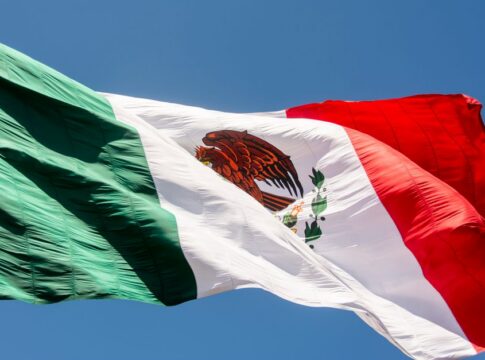
Photo: Jan van der Wolf / Pexels
By National News Daily Newsroom, National Desk — Published September 20, 2026
Table of Contents
- Key Takeaways
- The Background & Context
- Why This Matters
- Reactions & Analysis
- What Happens Next
- Frequently Asked Questions
Federal and state authorities have charged a Mexican national with illegally casting a ballot in the November 2024 election, marking one of several prosecutions announced as part of a broader crackdown on noncitizen voting. The case, which emerged from a multi-agency investigation, represents part of a coordinated effort by the Department of Justice and Texas officials to enforce election laws and prosecute individuals accused of unlawfully participating in the democratic process.
The arrest comes amid heightened scrutiny of election integrity and voting procedures across the United States. According to announcements from federal and state authorities, the Mexican national charged is among at least 16 individuals facing federal charges for illegal voting and related election crimes, with seven people specifically charged in Texas for noncitizen voting offenses.
This prosecution sends a clear signal about enforcement priorities in an era when election security remains a contentious political issue. The case raises questions about how noncitizens end up on voter rolls, what safeguards exist to prevent illegal voting, and what consequences await those who violate federal election laws.
Key Takeaways
- A Mexican national has been arrested and charged with illegally voting in the November 2024 election, part of a broader federal enforcement action.
- The Department of Justice announced charges against 16 individuals nationwide for illegal voting and related election crimes.
- Texas and federal authorities jointly announced noncitizen voting charges against seven people in the state.
- The cases represent a coordinated effort between federal and state law enforcement to prosecute election law violations.
- The charges underscore ongoing debates about election integrity, voter roll accuracy, and noncitizen participation in U.S. elections.
- Penalties for illegal voting by noncitizens can include criminal prosecution, fines, imprisonment, and immigration consequences including deportation.
The Background & Context
Noncitizen voting in federal elections has been illegal under U.S. law for decades. Only U.S. citizens are permitted to vote in federal elections, including races for president, Senate, and House of Representatives. This prohibition is enshrined in federal statute and carries serious criminal penalties for violators.
The issue has gained prominence in recent election cycles. Advocates for stricter voting laws argue that noncitizen voting, while rare, undermines election integrity and dilutes the votes of legitimate citizens. They point to cases like these prosecutions as evidence that enforcement is necessary and that gaps in the voter registration system allow ineligible individuals to slip through.
On the other side, voting rights advocates contend that illegal voting by noncitizens is exceptionally uncommon and that aggressive prosecution efforts can have a chilling effect on legitimate voters, particularly naturalized citizens and members of immigrant communities who may fear scrutiny. They argue that the focus on noncitizen voting is disproportionate to its actual occurrence and can be weaponized for political purposes.
The mechanics of how noncitizens end up registered to vote vary. In some cases, individuals may mistakenly register when obtaining driver’s licenses or other government services, not fully understanding the legal requirements. In other instances, people may deliberately misrepresent their citizenship status. Voter registration systems rely heavily on self-attestation, with applicants affirming under penalty of perjury that they are citizens.
Texas has been particularly active in pursuing noncitizen voting cases. State officials have implemented various measures aimed at identifying and removing noncitizens from voter rolls, though these efforts have sometimes sparked legal challenges over accuracy and potential disenfranchisement of eligible voters. The state’s collaboration with federal authorities on these prosecutions reflects a coordinated approach to enforcement.
Why This Matters
For American voters and taxpayers, these prosecutions touch on fundamental questions about democratic legitimacy and the rule of law. Elections are the cornerstone of representative government, and public confidence in their integrity is essential for a functioning democracy.
When noncitizens vote illegally, it violates the principle that only citizens should participate in choosing the nation’s leaders and determining its policies. Each illegal vote potentially dilutes the voting power of eligible citizens. While studies consistently show that noncitizen voting is rare, even isolated cases can erode public trust in election outcomes.
The cases also highlight practical challenges in election administration. State and local officials must balance accessibility—making it easy for eligible citizens to register and vote—with security measures to prevent ineligible participation. Overly restrictive systems risk disenfranchising legitimate voters, while overly permissive systems may fail to catch ineligible registrants.
For immigrant communities, these prosecutions can create anxiety. Naturalized citizens who are fully eligible to vote may worry about being wrongly accused or caught up in enforcement sweeps. The fear of scrutiny can discourage civic participation among those who have every right to engage in the democratic process.
The timing matters too. Coming after the November 2024 election, these charges arrive in a political environment where election integrity claims have become increasingly partisan. How authorities pursue and publicize such cases can influence public perception of both the prevalence of election fraud and the fairness of enforcement efforts.
Reactions & Analysis
The Department of Justice’s announcement of charges against 16 individuals nationwide signals a federal commitment to prosecuting election crimes. By bringing these cases, federal prosecutors are asserting that illegal voting will face serious consequences, regardless of whether it affects election outcomes.
The joint announcement by Texas and federal authorities of seven noncitizen voting charges in the state demonstrates coordination between different levels of government. This partnership allows prosecutors to leverage both federal and state laws, potentially bringing more severe penalties and ensuring that cases are pursued aggressively.
Legal experts note that prosecuting election crimes requires proving intent in many cases. Defendants may argue they made honest mistakes or misunderstood their eligibility. Prosecutors must demonstrate that individuals knowingly violated the law, which can be challenging without clear evidence of deliberate deception.
The defense strategies in such cases often hinge on claims of confusion or administrative error. Attorneys may argue that their clients received mixed signals from government agencies, that language barriers led to misunderstandings, or that bureaucratic mistakes resulted in improper registration without the individual’s knowledge.
Civil liberties organizations have historically expressed concern about aggressive prosecution of voting-related offenses, particularly when they disproportionately affect immigrant communities. They argue that resources devoted to pursuing rare cases of noncitizen voting could be better spent on improving voter education and registration systems to prevent errors before they occur.
Election officials face the difficult task of maintaining accurate voter rolls while processing millions of registrations. The Supreme Court has weighed in on related issues in recent years, including disputes over voter roll maintenance procedures and states’ authority to implement citizenship verification requirements. These legal precedents shape how authorities can investigate and prosecute potential violations.
What Happens Next
The charged individuals will proceed through the criminal justice system, facing arraignment, potential plea negotiations, and possibly trial. Federal charges for illegal voting can carry significant penalties, including fines and imprisonment. For noncitizens, a conviction can also trigger immigration consequences, including removal proceedings and permanent bars to future legal status.
These cases may set precedents for future prosecutions. How courts handle questions of intent, the sufficiency of evidence, and appropriate sentencing will guide prosecutors and defense attorneys in subsequent cases. The outcomes could either embolden authorities to pursue more such cases or reveal limitations in proving illegal voting charges.
At the policy level, these prosecutions may fuel calls for changes to voter registration and verification systems. Some lawmakers may push for stricter citizenship checks, while others may advocate for better voter education and clearer communications to prevent inadvertent violations.
The federal government’s approach to election crime enforcement could shift depending on political leadership and priorities. Different administrations may emphasize different aspects of election security, affecting how aggressively such cases are pursued and what resources are devoted to investigations.
For election administrators, these cases underscore the need for robust systems to verify citizenship while ensuring that eligible voters can register easily. States may invest in better data-sharing between agencies, improved training for registration workers, and clearer application materials that reduce the risk of errors.
Frequently Asked Questions
What are the penalties for noncitizens who vote illegally in U.S. elections?
Noncitizens who vote illegally in federal elections face serious consequences. Federal law makes it a crime punishable by fines and imprisonment. Beyond criminal penalties, noncitizens convicted of illegal voting face immigration consequences including deportation and permanent inadmissibility to the United States. Even without criminal conviction, admitting to illegal voting can result in removal proceedings and denial of future immigration benefits, including naturalization applications.
How do noncitizens end up registered to vote if it’s illegal?
Noncitizens may end up on voter rolls through various pathways. Some inadvertently register when obtaining driver’s licenses or state identification cards, particularly in states where registration is integrated into these processes. Others may misunderstand eligibility requirements or receive incorrect information. In some cases, individuals deliberately misrepresent their citizenship status on registration forms. Voter registration systems typically rely on self-attestation under penalty of perjury, with limited immediate verification of citizenship claims, creating opportunities for errors or fraud.
How common is illegal voting by noncitizens in U.S. elections?
Research consistently shows that illegal voting by noncitizens is extremely rare. Multiple studies and investigations have found only isolated cases despite millions of votes cast in federal elections. While exact numbers are difficult to determine, the available evidence suggests that noncitizen voting occurs at rates far too low to affect election outcomes. However, even rare cases can undermine public confidence in elections, which is why authorities pursue prosecutions when violations are discovered.
What safeguards exist to prevent noncitizens from voting?
Multiple safeguards aim to prevent noncitizen voting. Voter registration applications require attestation of citizenship under penalty of perjury, making false claims a crime. Many states cross-reference voter registration data with other government databases, including motor vehicle records and jury duty responses. Some jurisdictions require documentary proof of citizenship for registration. Election officials conduct regular maintenance of voter rolls to identify and remove ineligible registrants. Federal and state laws authorize prosecution of those who vote illegally, serving as a deterrent. Despite these measures, no system is perfect, and isolated violations occasionally occur.
As these cases move forward, they will continue to shape the national conversation about election security, immigration enforcement, and the balance between access and integrity in American democracy. For now, the arrests serve as a reminder that voting is both a cherished right and a serious legal responsibility, reserved exclusively for U.S. citizens who bear the privilege and duty of choosing their government.