
Electoral College System: How Presidential Votes Work
By Newsroom, Politics & Policy Desk — Published August 4, 2026
Table of Contents
- The Mechanics: From Ballot to Electoral Vote
- Historical Roots and the Framers’ Intent
- Why Campaigns Focus on Swing States
- Arguments For and Against the System
- Reform Proposals and Political Realities
- Frequently Asked Questions
Every four years, Americans head to the polls to elect a president, but the winner isn’t determined by a simple nationwide vote count. Instead, the electoral college system channels those votes through a uniquely American institution that has shaped political strategy, campaign finance, and governance issues since the founding. Understanding how this mechanism works—and why it persists despite recurring debates over policy reform—reveals much about the regulatory framework underpinning presidential elections and the political agenda surrounding voting rights.
The system can feel confusing. Voters cast ballots for a candidate, yet they’re technically selecting electors pledged to that candidate. Those electors later meet to formally choose the president. This two-step process has profound implications for political strategy, congressional action on voter legislation, and even judicial appointments that hinge on who wins the White House.
The Mechanics: From Ballot to Electoral Vote
Each state receives a number of electors equal to its total congressional delegation: House members plus two senators. The District of Columbia gets three electors under the Twenty-Third Amendment. That adds up to 538 total electors, meaning a candidate needs 270 to win.
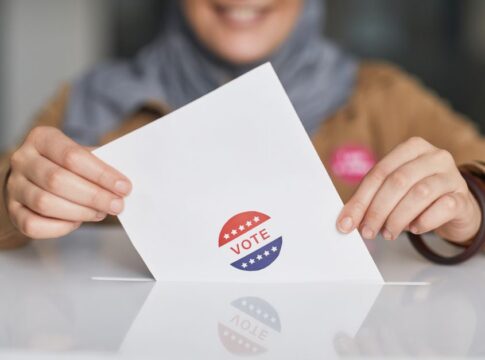
When voters mark their ballots in November, they’re choosing which slate of electors their state will send to the Electoral College. Most states use a winner-take-all rule: the candidate who wins the popular vote in that state claims all its electors. Maine and Nebraska split their electors by congressional district, awarding two to the statewide winner and one to the winner of each district. This creates a different calculus for campaign strategy in those states.
The electors meet in their respective state capitals in mid-December to cast their official votes. Congress counts those votes in early January during a joint session. Only then is the president-elect formally confirmed, setting the stage for policy implementation and the incoming administration’s political agenda.
Who Are the Electors?
Electors are typically party loyalists, state legislators, or local officials chosen by state parties or conventions. The Constitution bars federal officeholders from serving as electors, preventing conflicts of interest in the legislative process and lawmaking. Most electors vote as pledged, though a handful of “faithless electors” have occasionally broken ranks—rarely enough to change an outcome, but enough to spark debates about the regulatory framework governing their conduct.
Historical Roots and the Framers’ Intent
The Constitutional Convention of 1787 faced a dilemma. Direct popular election seemed impractical in an era of poor communication and limited national identity. Letting Congress choose the president risked undermining executive independence. The Electoral College emerged as a compromise, blending federalism with representative democracy.
The framers envisioned electors as informed intermediaries who would deliberate and choose the best candidate. That vision eroded quickly. Political parties formed, and electors became rubber stamps for their party’s nominee. The Twelfth Amendment, ratified in 1804 after a chaotic 1800 election, formalized the ticket system linking presidents and vice presidents.
Over two centuries, the system has survived because amending the Constitution requires extraordinary consensus: two-thirds of both houses of Congress and ratification by three-fourths of states. Small states benefit from the Senate’s equal representation, giving them disproportionate influence per capita. Any congressional action to abolish the Electoral College faces steep resistance from states that would lose clout.
Why Campaigns Focus on Swing States
Winner-take-all rules create a strategic map where only a dozen or so competitive states matter. Candidates pour resources into these battlegrounds, tailoring their political strategy and regulatory promises to voters there. Safe states—whether reliably red or blue—see far less attention, raising questions about equitable governance issues and voter engagement.
This dynamic shapes political campaign strategy and finance. Advertising dollars, ground operations, and candidate visits concentrate in Pennsylvania, Wisconsin, Arizona, and a few others. The rest of the country becomes a backdrop. Critics argue this distorts the political agenda, pushing candidates to prioritize swing-state concerns over national needs.
It also influences congressional committee proceedings and bipartisan negotiations. Lawmakers from competitive states wield outsized influence, knowing their electoral votes hang in the balance. That can facilitate coalition building when interests align, or fuel gridlock when regional priorities clash.
Arguments For and Against the System
Supporters defend the Electoral College on several grounds:
- Federalism: It preserves the role of states as distinct political units, not just administrative zones. Presidential candidates must build geographically diverse coalitions rather than simply racking up votes in population centers.
- Stability: Winner-take-all outcomes usually produce clear majorities, avoiding the fragmentation common in parliamentary systems. Decisive results support smoother policy implementation and transitions of power.
- Protection for smaller states: Without the Electoral College, candidates might focus exclusively on large urban areas, ignoring rural and less-populous regions. The current framework forces some attention to varied interests.
- Constitutional continuity: The system has worked for more than two centuries. Radical change could introduce unforeseen consequences in executive orders, presidential powers, and the balance among branches.
Opponents counter with their own case:
- Unequal voter weight: A vote in Wyoming carries roughly four times the weight of a vote in California, measured by electors per capita. This undermines the principle of one person, one vote central to voting rights.
- Swing-state distortion: Most voters live in states where the outcome is predetermined. Their votes feel meaningless, depressing turnout and civic engagement.
- Popular vote divergence: Five times in history, including twice this century, the Electoral College winner lost the nationwide popular vote. Critics see this as a legitimacy crisis that complicates governance and policy reform efforts.
- Faithless electors: Though rare, the possibility that electors could defy voters raises concerns about democratic accountability and the regulatory framework ensuring elections reflect the people’s will.
Reform Proposals and Political Realities
Several alternatives have been proposed. A constitutional amendment for direct popular election surfaces regularly but never gains the required supermajority. The National Popular Vote Interstate Compact offers a workaround: participating states agree to award their electors to the nationwide popular vote winner once enough states join to reach 270 electoral votes. Fifteen states and D.C. have signed on, but the compact remains short of activation and faces potential legal challenges regarding congressional action and interstate agreements.
Other ideas include proportional allocation of electors within states or expanding the House to rebalance representation. Each proposal faces obstacles rooted in partisan advantage, federalism principles, and the sheer difficulty of altering constitutional structures. Voter legislation touching the Electoral College inevitably becomes entangled with broader debates over electoral systems, judicial appointments, and executive power.
The system’s resilience reflects both structural inertia and genuine philosophical divides. For some, the Electoral College embodies federalism and protects pluralism. For others, it’s an antidemocratic relic that warps political strategy and undermines equal representation. These tensions won’t resolve quickly, leaving the current framework intact for the foreseeable future.
Frequently Asked Questions
Can electors vote for anyone they want?
Technically, the Constitution doesn’t bind electors to vote for their pledged candidate, but many states have laws requiring it. The Supreme Court upheld these laws in 2020, allowing states to penalize or replace faithless electors. In practice, electors almost always vote as expected, making rogue votes rare and unlikely to alter outcomes.
What happens if no candidate reaches 270 electoral votes?
If no candidate wins a majority, the election goes to the House of Representatives under the Twelfth Amendment. Each state delegation gets one vote, and a majority of states is needed to win. The Senate chooses the vice president. This contingent election process has happened twice, most recently in 1825, and would create significant uncertainty in policy implementation and governance.
Why do states get different numbers of electors?
Electoral votes reflect each state’s total congressional representation: House seats based on population plus two senators. This gives smaller states slightly more weight per capita than a purely population-based system would. The allocation shifts every ten years after the census, as House seats are reapportioned based on population changes.
Could the Electoral College ever be abolished?
Abolition would require a constitutional amendment, demanding two-thirds approval in both the House and Senate, then ratification by three-fourths of state legislatures. That’s a high bar, especially since smaller states benefit from the current system and would likely oppose losing influence. The National Popular Vote compact offers an alternative path, but its legal standing remains untested and its activation uncertain.
The electoral college system remains a defining feature of American presidential elections, shaping everything from campaign stops to policy priorities. Whether viewed as a safeguard of federalism or an outdated mechanism, it continues to structure how candidates seek power and how voters experience democracy. Understanding its workings helps citizens engage more thoughtfully with the political process and the ongoing debates over how best to choose a president.