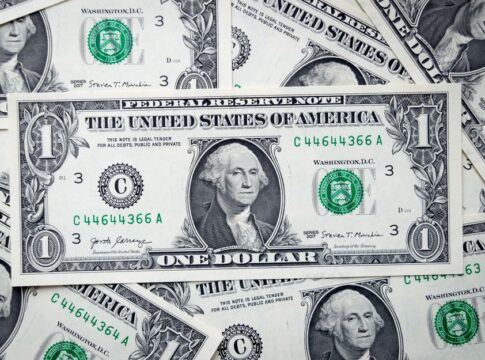
Photo: Lukasz Radziejewski / Pexels
By Daily American Press Newsroom, Economy Desk — Published November 10, 2026
Table of Contents
- Key Takeaways
- The Background & Context
- Why This Matters
- Reactions & Analysis
- What Happens Next
- Frequently Asked Questions
Americans watching their wallets are asking a familiar question: Will the Federal Reserve‘s fight against inflation push the economy into recession? It’s not an idle worry. Every time the central bank raises interest rates to cool down prices, Wall Street and Main Street alike brace for impact. The federal reserve interest rate decisions have historically walked a razor’s edge—taming inflation without killing growth entirely.
The debate has intensified as economists and investors scan the horizon for warning signs. Some analysts are already positioning their portfolios for a potential downturn as early as 2027, signaling that concerns about economic contraction remain very much alive. Understanding what happened in past rate-hiking cycles offers crucial context for what American families, businesses, and workers might face in the months and years ahead.
History doesn’t repeat itself, but it often rhymes. The Federal Reserve has raised rates numerous times over the decades, sometimes engineering a “soft landing” where inflation cools without triggering mass unemployment, and other times ushering in painful recessions. The outcomes have varied widely depending on the speed of rate increases, the underlying health of the economy, and external shocks beyond the Fed’s control.
Key Takeaways
- Federal Reserve interest rate hikes have historically preceded both soft landings and recessions, with outcomes depending on economic conditions and policy execution.
- The relationship between rate increases and economic downturns is not automatic—context matters, including inflation levels, employment strength, and global factors.
- Investors are already preparing defensive strategies for a possible recession in 2027, suggesting widespread concern about the economic trajectory.
- Past cycles show that aggressive rate hikes to combat stubborn inflation often come with economic pain, though the severity varies considerably.
- The Fed’s dual mandate—controlling inflation while maintaining employment—creates inherent tension during tightening cycles that affects millions of American workers.
- Historical patterns provide guidance but not guarantees, as each economic era presents unique challenges and structural differences.
The Background & Context
The Federal Reserve uses interest rates as its primary tool to manage economic growth and price stability. When inflation runs too hot, the central bank raises the federal funds rate—the benchmark that influences everything from mortgage rates to credit card APRs to business loans. Higher rates make borrowing more expensive, which theoretically slows consumer spending and business investment, cooling demand and bringing prices back down.
This mechanism has been deployed repeatedly throughout American economic history. In the early 1980s, Fed Chairman Paul Volcker raised rates to eye-watering levels—exceeding 19 percent at one point—to crush double-digit inflation. The medicine worked, but the side effects were brutal: back-to-back recessions in 1980 and 1981-82, with unemployment soaring above 10 percent. Millions of Americans lost jobs. Entire industries contracted.
Not every tightening cycle ends so painfully. The mid-1990s saw the Fed successfully navigate a soft landing under Chairman Alan Greenspan, raising rates enough to prevent the economy from overheating without triggering a recession. Economic growth continued. Jobs remained plentiful. It was the outcome policymakers dream about but rarely achieve.
More recently, the Fed kept rates near zero for years following the 2008 financial crisis and again during the COVID-19 pandemic. When inflation surged in 2021 and 2022—driven by supply chain disruptions, massive government stimulus, and pent-up consumer demand—the central bank reversed course dramatically. The speed and magnitude of rate increases not seen in decades raised immediate questions about whether the economy could withstand such aggressive tightening.
The historical record shows no simple formula. Sometimes rate hikes precede recessions by months; other times the economy proves resilient. Variables include how quickly rates rise, where they peak, how long they stay elevated, and crucially, what else is happening in the broader economy and global markets.
Why This Matters
For ordinary Americans, the federal reserve interest rate decisions aren’t abstract policy debates—they’re kitchen-table economics. When the Fed raises rates, families pay more to finance cars and homes. Credit card balances become more expensive to carry. Small businesses face higher costs to expand or maintain inventory. The ripple effects touch virtually every household budget.
Jobs represent the most critical concern. Recessions mean layoffs, hiring freezes, and reduced hours. The unemployment rate—currently at historically low levels—could spike if economic growth stalls. Young workers entering the job market, older employees nearing retirement, and those in cyclical industries like construction and manufacturing face particular vulnerability during downturns.
The stakes extend beyond individual circumstances to broader societal questions. Recessions strain government budgets as tax revenues decline while demand for unemployment benefits and social services increases. State and local governments may cut essential services. Infrastructure projects get delayed. Educational funding faces pressure.
Wall Street’s reaction to rate policy also matters for Main Street, even for Americans who don’t actively trade stocks. Retirement accounts—401(k)s, IRAs, pension funds—hold trillions in equities that can swing wildly based on recession fears. A sustained market downturn erodes the nest eggs millions of workers depend on for financial security in their later years.
Inflation itself inflicts pain, of course. Prices that rise faster than wages effectively cut living standards, hitting lower-income families hardest since they spend larger portions of income on necessities like food, housing, and energy. The Fed’s challenge is determining whether the cure of higher rates might prove worse than the disease of persistent inflation.
Reactions & Analysis
The investment community is already gaming out scenarios. According to reports, some investors are making defensive moves in anticipation of a potential recession arriving in 2027. This forward-looking positioning reflects both historical patterns—economic expansions don’t last forever—and specific concerns about how the current rate environment might play out over the next few years.
Defensive investing typically means shifting assets toward sectors that perform relatively well during downturns: consumer staples, healthcare, utilities. Investors might also increase cash positions or buy bonds, which become more attractive when rates are high. These portfolio adjustments, while prudent for individuals, can become self-fulfilling if enough market participants simultaneously reduce risk exposure and pull back from growth investments.
Economists remain divided on the likelihood and timing of a recession. Some point to strong labor markets, healthy consumer balance sheets, and moderating inflation as evidence the economy can weather higher rates. Others note that rate hikes work with long and variable lags—meaning the full impact of past increases may not yet have hit the economy. Predicting recessions is notoriously difficult even for professionals with sophisticated models.
Historical analysis provides both comfort and caution. Yes, the Fed has successfully achieved soft landings before. But recessions have also followed rate-hiking campaigns with depressing regularity. The Volcker era demonstrated that defeating entrenched inflation requires resolve and acceptance of short-term pain. The question is whether today’s Fed faces similar circumstances or whether the economy has enough underlying strength to avoid severe contraction.
Public sentiment reflects this uncertainty. Consumer confidence surveys show Americans worried about both inflation and recession—a uniquely uncomfortable combination. Businesses report difficulty planning for the future when the economic outlook remains murky. This hesitation itself can slow growth as companies delay hiring and investment decisions.
What Happens Next
The path forward depends on variables that remain in flux. Inflation trends will heavily influence Fed decisions. If price pressures continue moderating toward the central bank’s 2 percent target, policymakers may feel comfortable holding rates steady or even cutting them, reducing recession risk. Persistent inflation, however, could force the Fed to keep rates higher for longer—or even resume increases—raising the odds of economic contraction.
Global factors also matter. International trade tensions, energy price shocks, financial instability abroad, or geopolitical crises can all impact the U.S. economy regardless of domestic monetary policy. The interconnected nature of modern markets means the Fed doesn’t operate in isolation, even as it focuses on American economic conditions.
Employment data will serve as a crucial barometer. The Fed watches job numbers closely, knowing that a weakening labor market often precedes recession. Rising unemployment claims, slowing wage growth, or declining job openings would signal that rate policy is beginning to bite—potentially prompting policy adjustments.
For Americans planning their financial futures, history suggests both vigilance and perspective. Recessions are normal parts of economic cycles, not apocalyptic events. Past downturns have always eventually given way to recovery and expansion. At the same time, preparation makes sense: maintaining emergency savings, avoiding excessive debt, and diversifying income sources where possible.
The 2027 timeline mentioned by some investors isn’t prophecy—it’s educated speculation based on typical expansion lengths and current conditions. Economic forecasting remains an imperfect science. What history does teach clearly is that federal reserve interest rate policy carries enormous consequences, that tradeoffs between inflation and growth are real, and that ordinary Americans bear the costs and benefits of these high-stakes decisions.
Frequently Asked Questions
How often do Federal Reserve rate hikes cause recessions?
The relationship isn’t automatic or perfectly predictable. Many rate-hiking cycles have preceded recessions—including those in 1980, 1981-82, 1990-91, 2001, and 2007-09—but the Fed has also achieved soft landings where the economy continued growing despite higher rates. The outcome depends on numerous factors including the speed of rate increases, starting economic conditions, inflation levels, and external shocks. Historical data shows mixed results, making each cycle somewhat unique.
What is a “soft landing” and has the Fed achieved it before?
A soft landing occurs when the Federal Reserve successfully slows economic growth and reduces inflation through higher interest rates without triggering a recession. The mid-1990s represents the most cited example, when the Fed under Alan Greenspan raised rates to prevent overheating while the economy continued expanding and unemployment remained low. Soft landings are difficult to execute because the Fed must calibrate policy precisely—tightening enough to control inflation but not so much that growth collapses.
Why are some investors preparing for a 2027 recession?
Economic expansions historically don’t last indefinitely, and investors use historical patterns, current rate levels, and economic indicators to anticipate future downturns. The 2027 timeframe represents a projection based on typical business cycle lengths and the lagged effects of monetary policy tightening. Investors position portfolios defensively to protect capital during potential downturns, shifting toward safer assets and sectors that perform relatively well during recessions. These preparations reflect prudent risk management rather than certain predictions.
How do higher interest rates actually slow the economy?
Higher rates increase borrowing costs throughout the economy, affecting consumer and business behavior. Mortgages become more expensive, reducing home buying and construction. Auto loans cost more, slowing vehicle purchases. Credit cards carry higher rates, discouraging consumer spending. Businesses face increased costs for expansion, hiring, and inventory financing, leading to reduced investment. These effects accumulate across the economy, cooling demand for goods and services, which eventually reduces price pressures but can also slow growth and increase unemployment.
The Federal Reserve’s balancing act continues, with millions of American livelihoods hanging in the balance. History offers lessons but no guarantees. What remains certain is that interest rate policy will continue shaping economic outcomes, job prospects, and household finances for years to come. Whether the next chapter brings soft landing or recession depends on decisions still being made—and economic forces still unfolding.