
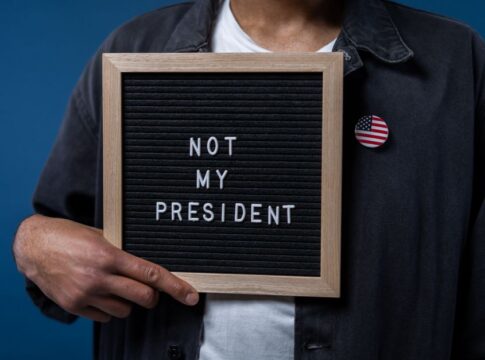
Photo: cottonbro studio / Pexels
By National News Daily Newsroom, Politics Desk — Published November 8, 2026
Table of Contents
- Key Takeaways
- The Background & Context
- Why This Matters
- Reactions & Analysis
- What Happens Next
- Frequently Asked Questions
In a dramatic shake-up that signals a harder pivot toward ideological enforcement, former President Donald Trump has tapped Stephen Miller to replace Susie Wiles as White House chief of staff. The move places one of Trump’s most controversial and steadfast loyalists at the helm of West Wing operations. Miller, architect of some of the administration’s most contentious immigration policies during Trump’s first term, now assumes the most powerful unelected position in American government.
The decision marks a sharp departure from Wiles’ tenure. Where Wiles was known as a disciplined political operative who helped steer Trump’s recent campaign to victory, Miller represents ideological purity and confrontational governance. According to multiple reports, the appointment has already sparked alarm among former Trump aides and political observers who view Miller’s elevation as a signal that Trump intends to double down on his most hard-line agenda items.
The chief of staff role traditionally serves as gatekeeper, policy coordinator, and crisis manager. With Miller in charge, the White House appears poised to prioritize aggressive executive action over coalition-building. For voters who supported Trump’s populist promises and those who fear executive overreach, the stakes could not be higher.
Key Takeaways
- Stephen Miller replaces Susie Wiles as White House chief of staff in a major personnel shift that elevates Trump’s most ideological adviser to the administration’s top operational role.
- Former Trump aides have described the prospect of Miller replacing Wiles as “terrifying,” signaling internal concerns about the direction of White House operations.
- The appointment represents Trump doubling down on his hard-line agenda, particularly on immigration and executive power.
- Wiles, who managed Trump’s successful campaign operation, brought organizational discipline that contrasts sharply with Miller’s reputation for ideological warfare.
- The move has immediate implications for how the White House will engage with Congress, federal agencies, and the public on contentious policy matters.
- Miller’s elevation suggests a White House less interested in political accommodation and more focused on maximizing executive authority.
The Background & Context
Stephen Miller first emerged as a national figure during Trump’s 2016 campaign, where his hardline immigration rhetoric helped define the candidate’s populist appeal. During the first Trump administration, Miller served as a senior adviser and became the principal architect of policies including the travel ban targeting majority-Muslim countries, family separation at the southern border, and aggressive efforts to restrict both legal and illegal immigration.
His approach was uncompromising. Miller viewed immigration policy through a zero-sum lens, treating compromise as capitulation. He clashed frequently with Cabinet officials, career civil servants, and even fellow White House staff who sought more moderate approaches. Yet Trump valued Miller’s loyalty and ideological consistency above all else.
Susie Wiles, by contrast, built her reputation as a Florida political operative who delivered results through strategic discipline rather than ideological combat. She managed Trump’s 2024 campaign with remarkable effectiveness, helping him secure the Republican nomination and positioning him for a general election victory. Wiles was known for imposing structure on Trump’s often chaotic political operation, screening access to the candidate and maintaining message discipline.
The chief of staff position has historically served as a critical balancing act. The role requires managing competing factions within an administration, coordinating policy across federal agencies, maintaining relationships with Congress, and serving as the president’s most trusted adviser. Different presidents have used the position differently. Some chiefs serve as honest brokers; others as enforcers of presidential will.
Miller’s appointment suggests Trump has chosen the latter model. Rather than seeking someone who will moderate his impulses or build coalitions, Trump has selected an adviser who will amplify his most controversial instincts and work to eliminate internal resistance to his agenda.
Why This Matters
For American citizens, the identity of the White House chief of staff matters enormously, even if the position receives less attention than Cabinet secretaries or Supreme Court justices. The chief controls access to the president, shapes the policy agenda, and determines which ideas reach the Oval Office for final decision.
With Miller in this role, several significant shifts become likely. Immigration enforcement will almost certainly intensify, with aggressive deportation operations, renewed efforts to restrict asylum, and potential challenges to birthright citizenship. Miller has long advocated for maximalist interpretations of executive power on immigration, and as chief of staff, he will have the authority to coordinate action across the Department of Homeland Security, Department of Justice, and other agencies.
The appointment also signals how Trump intends to handle congressional relations. Wiles brought political savvy and relationship-building skills. Miller brings ideological warfare. Legislation requiring bipartisan cooperation may take a back seat to executive orders and regulatory changes that bypass Congress entirely. For voters concerned about democratic norms and separation of powers, this represents a fundamental shift in governance philosophy.
Federal workers face particular uncertainty. Miller has expressed open contempt for the “deep state” and career civil service. As chief of staff, he will likely push for Schedule F reclassification of federal employees, making it easier to fire career officials and replace them with political loyalists. This could fundamentally reshape how the federal government operates, replacing expertise with ideology across agencies.
The business community and economic policymakers also face questions. While Miller’s portfolio has focused primarily on immigration and domestic security, his role as chief of staff gives him influence over all policy domains. His confrontational style could complicate efforts to pass business-friendly legislation or maintain stable relationships with international trading partners.
Reactions & Analysis
The response to Miller’s appointment has been swift and polarized. According to reports, at least one former Trump aide characterized the prospect of replacing Wiles with Miller as “terrifying,” suggesting deep concern even among those who previously worked in the Trump orbit. This insider criticism speaks to Miller’s reputation for ideological rigidity and willingness to burn bridges in pursuit of policy goals.
News coverage has emphasized that Trump is doubling down on his hard-line agenda through this appointment. The New York Times noted the elevation represents a commitment to maximalist positions rather than political moderation. For Trump’s base, this may be welcome news—a signal that their champion will not be restrained by establishment Republicans or bureaucratic resistance.
Critics view the appointment as confirmation of their worst fears about a second Trump term. They point to Miller’s track record of pushing legally questionable policies, his willingness to ignore traditional constraints on executive power, and his history of inflammatory rhetoric. Civil liberties organizations have already begun preparing legal challenges to anticipated policy moves.
Congressional Republicans face a delicate balancing act. Many privately express concern about Miller’s approach but remain reluctant to publicly criticize a personnel choice by their party’s leader. Democrats have seized on the appointment as evidence that Trump plans to govern without regard for institutional norms or bipartisan cooperation.
The international community watches with apprehension. Miller’s previous tenure saw strained relationships with traditional allies over immigration policy, refugee admissions, and human rights concerns. Foreign diplomats wonder whether his elevation signals a broader turn toward unilateralism across the administration’s foreign policy.
What Happens Next
Miller’s first moves as chief of staff will set the tone for the administration’s trajectory. Expect immediate personnel changes throughout the White House and across agencies. Miller will likely install loyalists in key positions, particularly those dealing with immigration, law enforcement, and regulatory policy. Career officials who previously resisted Trump-era directives may find themselves reassigned or pushed out entirely.
On policy, immigration will dominate the early agenda. Miller has spent years developing detailed plans for mass deportation operations, border wall expansion, and asylum restrictions. With control over White House operations, he can now coordinate implementation across multiple agencies simultaneously. Legal challenges will follow, but Miller has shown willingness to defend controversial policies through lengthy court battles.
The relationship between the White House and Congress will be tested quickly. Appropriations bills, debt ceiling negotiations, and routine legislative business all require some level of cooperation. Miller’s appointment suggests Trump may prefer executive action over legislative compromise, potentially leading to constitutional confrontations over the limits of presidential authority.
Within the Republican Party, Miller’s elevation may accelerate the transformation from a traditional conservative coalition toward a more populist, nationalist movement. Establishment Republicans who hoped for a more conventional second Trump term now face the reality of an administration led by one of its most ideological figures.
For the 2026 midterm elections, Miller’s presence as chief of staff gives Democrats a clear target. They will argue that Trump has abandoned any pretense of moderate governance in favor of extremism. Republicans will counter that Trump is simply keeping his promises to voters who elected him precisely because of his willingness to challenge the status quo.
Frequently Asked Questions
Who is Stephen Miller and what is his background?
Stephen Miller served as a senior adviser during Trump’s first term, where he became the principal architect of the administration’s immigration policies. He previously worked for Senator Jeff Sessions and helped shape Trump’s hardline positions on immigration, border security, and executive power. Miller is known for his ideological commitment to restricting both legal and illegal immigration and his willingness to push controversial policies despite political and legal opposition.
Why did Susie Wiles leave the chief of staff position?
The specific circumstances of Wiles’ departure have not been fully detailed in available reports. However, her replacement by Miller represents a significant shift in approach from her disciplined, campaign-focused management style to Miller’s ideologically driven governance philosophy. The change suggests Trump is prioritizing ideological loyalty and aggressive policy implementation over the organizational discipline Wiles brought to the role.
What powers does the White House chief of staff have?
The chief of staff is the highest-ranking employee in the White House and serves as the president’s gatekeeper, controlling access to the Oval Office and managing the flow of information and personnel. The chief coordinates policy across federal agencies, manages White House staff, handles relations with Congress, and often serves as the president’s most trusted adviser. While the position has no constitutional authority, its influence derives from proximity to presidential power and control over White House operations.
How might this appointment affect immigration policy?
Miller’s elevation to chief of staff signals that immigration enforcement will be a top priority for the administration. Given his track record as the architect of family separation policies, travel bans, and asylum restrictions during Trump’s first term, his new role suggests aggressive deportation operations, expanded border enforcement, and efforts to restrict legal immigration pathways. As chief of staff, Miller can now coordinate immigration policy across multiple agencies simultaneously, potentially implementing more sweeping changes than were possible during his previous role as senior adviser.
The appointment of Stephen Miller as White House chief of staff represents more than a personnel change. It is a statement of intent about how Trump plans to govern and what priorities will define his administration. For supporters who want aggressive action on immigration and executive power, Miller’s elevation is a promise kept. For critics concerned about democratic norms and constitutional limits, it is a warning sign. Either way, American politics has entered a new phase, one where ideology trumps accommodation and confrontation replaces compromise. The consequences will unfold in the weeks and months ahead.