Photo: Rafael Minguet Delgado / Pexels
By Daily American Press Newsroom, Economy Desk — Published September 20, 2026
Table of Contents
- Key Takeaways
- The Background & Context
- Why This Matters
- Reactions & Analysis
- What Happens Next
- Frequently Asked Questions
Wall Street stumbled Wednesday as investors absorbed the Federal Reserve‘s latest interest rate increase and the central bank’s hawkish signal that another hike may arrive before year’s end. The Dow Jones Industrial Average tumbled 500 points in a sharp reversal that underscored mounting anxiety about the economy’s trajectory and the Fed’s determination to wrestle inflation to the ground, even at the risk of dampening growth.
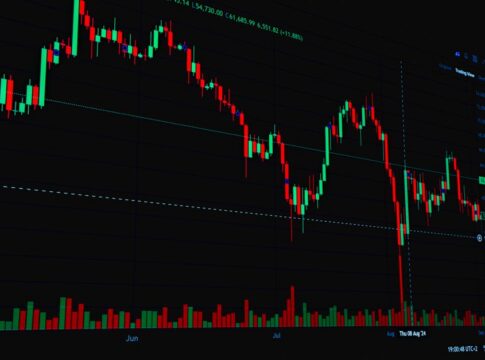
The selloff came swiftly. View stocks pull back across all major indices as traders digested the implications of tighter monetary policy ahead. The move caught many off guard, particularly those hoping the Fed might adopt a more dovish stance given recent signs of cooling inflation and a resilient jobs market.
For millions of Americans, the Fed’s decision reverberates far beyond Wall Street trading floors. Higher interest rates mean costlier mortgages, pricier car loans, and more expensive credit card debt. They also signal the central bank’s unwavering commitment to its inflation fight, even as that battle extracts a toll on household budgets and business investment plans.
Key Takeaways
- The Federal Reserve raised its key interest rate, continuing its campaign to control inflation through tighter monetary policy.
- Major stock indices declined sharply, with the Dow Jones Industrial Average falling 500 points following the announcement.
- The central bank signaled at least one additional rate hike could occur before the end of the year, surprising market participants who anticipated a pause.
- The decision reflects ongoing concerns about persistent inflation despite recent economic data showing some moderation in price pressures.
- Investors face renewed uncertainty about the balance between controlling inflation and maintaining economic growth.
- The rate increase will directly impact borrowing costs for consumers and businesses across the United States.
The Background & Context
The Federal Reserve embarked on its most aggressive rate-hiking cycle in decades beginning in early 2022, responding to inflation that surged to four-decade highs. What started as supply-chain disruptions during the pandemic evolved into broader price pressures across housing, food, energy, and services. The central bank’s benchmark rate, which influences borrowing costs throughout the economy, sat near zero at the start of 2022. Since then, policymakers have raised rates repeatedly in increments ranging from a quarter-point to three-quarters of a point.
The strategy aims to cool demand by making loans more expensive. When businesses and consumers borrow less, they spend less. Reduced spending should theoretically ease pressure on prices. But the medicine carries side effects. Higher rates can slow hiring, dampen business expansion, and even tip the economy into recession if applied too aggressively.
Recent months brought encouraging signs. Inflation metrics showed deceleration from their peaks. The jobs market remained robust, with unemployment near historic lows. Some economists argued the Fed could afford to pause, allowing previous rate increases time to work through the system. Financial markets rallied on hopes that the tightening cycle might be nearing its end.
Wednesday’s announcement dashed those hopes. The Fed’s updated projections suggested officials see inflation as more stubborn than previously thought. Committee members now anticipate holding rates higher for longer, with at least one more increase likely before 2024. That hawkish pivot sent tremors through trading desks from New York to San Francisco.
Why This Matters
Interest rates represent the price of money itself. When that price rises, the effects cascade through every corner of American economic life. Prospective homebuyers face mortgage rates that have more than doubled since 2021, pricing many families out of homeownership dreams. The average 30-year fixed mortgage now carries rates not seen in over a decade, transforming what was an affordable monthly payment into a budget-buster.
Small businesses feel the squeeze too. Entrepreneurs who might have borrowed to expand operations or hire workers now confront financing costs that make growth plans uneconomical. Corporate America faces similar calculations. Capital expenditure decisions that made sense at lower rates suddenly look less attractive, potentially slowing the innovation and investment that drive long-term prosperity.
Credit card debt becomes more burdensome. Americans carrying balances watch their minimum payments creep upward as card issuers pass along higher rates. Auto loans cost more, putting new vehicles further from reach for middle-class families already stretched by elevated prices for groceries and rent.
Yet the alternative carries its own dangers. If the Fed relents too soon, inflation could reignite. The 1970s taught a painful lesson about premature policy pivots. Back then, the central bank eased off before inflation was truly vanquished, leading to years of economic stagnation and repeated boom-bust cycles. Fed officials remember that history. They would rather risk overtightening than repeat past mistakes.
The stock market’s reaction reflects investor uncertainty about which risk dominates. A 500-point Dow decline represents billions in paper wealth evaporating within hours. Retirement accounts take hits. Pension funds see portfolio values shrink. The wealth effect works in reverse: when people feel poorer, they spend less, potentially accelerating the economic slowdown the Fed seeks.
Reactions & Analysis
Market analysts scrambled to recalibrate forecasts following the Fed’s announcement. The immediate selloff indicated that investors had positioned for a more dovish outcome. Bond yields climbed as traders repriced expectations for how long rates would remain elevated. The dollar strengthened against foreign currencies, reflecting higher returns available on dollar-denominated assets.
The pullback in view stocks revealed sector-specific vulnerabilities. Technology companies, whose valuations depend heavily on future earnings discounted back to present value, proved particularly sensitive. Higher discount rates mean those future profits are worth less today, depressing stock prices. Financial institutions faced a more complex calculus: higher rates boost lending margins but also increase the risk of loan defaults if the economy weakens.
Consumer discretionary stocks tumbled on fears that squeezed households will cut back on non-essential purchases. Retailers heading into the crucial holiday shopping season now confront the prospect of cautious consumers nursing strained budgets. Energy and commodity producers showed relative resilience, supported by supply concerns and ongoing global demand.
Some economists argued the Fed risks policy error by continuing to tighten even as inflation shows signs of moderating. They point to lagging effects: rate increases take months to fully impact the economy, meaning today’s hikes will still be working through the system well into next year. Others countered that core inflation—which excludes volatile food and energy prices—remains too high, justifying continued vigilance.
What Happens Next
The Fed’s forward guidance suggests rates will remain elevated through at least mid-2024. Markets must now adjust to a higher-for-longer reality that contradicts earlier hopes for rate cuts in the near term. This recalibration will likely inject continued volatility into equity and bond markets as investors grapple with reduced visibility.
Economic data releases will take on heightened importance. Each inflation report, jobs number, and GDP estimate will be scrutinized for signals about whether the Fed’s strategy is working or whether adjustments are needed. The central bank has emphasized its data-dependent approach, meaning no decision is predetermined. That flexibility, while prudent, also means uncertainty persists.
Corporate earnings season will test whether American businesses can maintain profitability amid higher borrowing costs and potentially weakening consumer demand. Guidance from executives about their outlook for the coming quarters will shape investor sentiment. Signs of deteriorating fundamentals could trigger further market weakness.
Housing markets face particular pressure. Existing homeowners with low fixed-rate mortgages enjoy protection, but the broader market confronts a freeze as high rates deter both buyers and sellers. Construction activity may slow, affecting employment in related industries from lumber to appliances. The ripple effects could extend well beyond real estate itself.
Politically, the Fed’s actions occur against a backdrop of upcoming elections. Economic conditions heavily influence voter sentiment. If rate hikes contribute to a recession or sharp rise in unemployment, the political ramifications could prove significant. Yet the Fed’s independence insulates it from short-term political pressures, allowing policymakers to focus on their dual mandate of stable prices and maximum employment.
Frequently Asked Questions
Why does the Federal Reserve raise interest rates?
The Federal Reserve raises interest rates primarily to combat inflation by making borrowing more expensive. When rates rise, consumers and businesses typically borrow and spend less, which reduces demand for goods and services. This decreased demand helps cool an overheating economy and brings prices back down to the Fed’s target of around two percent annual inflation. The central bank uses rate adjustments as its main tool to maintain economic stability and purchasing power.
How do interest rate increases affect ordinary Americans?
Higher interest rates directly impact household finances in multiple ways. Mortgages become more expensive, increasing monthly payments for homebuyers or making homeownership unaffordable for some families. Credit card interest charges rise, making existing debt costlier to carry. Auto loans and other consumer financing also become pricier. On the positive side, savers can earn higher returns on savings accounts and certificates of deposit. The overall effect depends on whether someone is primarily a borrower or a saver.
What does it mean when stocks pull back after a Fed announcement?
When stocks pull back following a Federal Reserve announcement, it typically signals that investors view the central bank’s decision as negative for corporate profits or economic growth. Higher interest rates can reduce company earnings by increasing borrowing costs and dampening consumer spending. They also make bonds more attractive relative to stocks, prompting some investors to shift allocations. The magnitude of the pullback often reflects how much the Fed’s action surprised markets or deviated from expectations.
Could these rate increases cause a recession?
Rate increases carry the risk of triggering a recession if they slow economic activity too dramatically. The Fed walks a delicate line between raising rates enough to control inflation but not so much that unemployment spikes and growth turns negative. Historical precedent shows that aggressive tightening cycles have sometimes ended in recessions, though outcomes vary based on specific economic conditions. The central bank monitors a wide range of indicators to calibrate policy and minimize the risk of overcorrection while still achieving its inflation objectives.
As markets digest the Fed’s latest move and its implications for the months ahead, Americans from Wall Street traders to Main Street families will be watching closely. The path forward remains uncertain, shaped by incoming data and the central bank’s evolving assessment of economic conditions. What’s clear is that the inflation fight continues, and its costs—measured in market volatility, higher borrowing expenses, and economic anxiety—will be borne across the nation.