
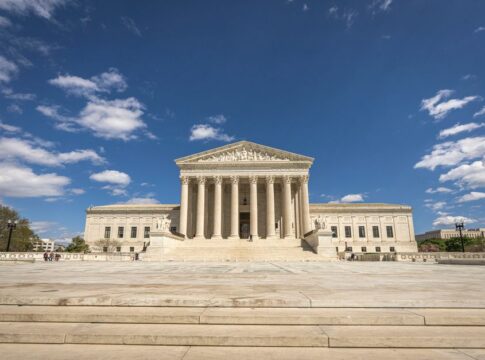
Photo: Mark Stebnicki / Pexels
By Daily American Press Newsroom, National Desk — Published September 15, 2026
Table of Contents
- Key Takeaways
- The Background & Context
- Why This Matters
- Reactions & Analysis
- What Happens Next
- Frequently Asked Questions
The U.S. Supreme Court‘s shadow docket—emergency orders issued without full briefing or oral argument—has surged into the national spotlight as a powerful tool shaping federal government policy in real time. During the second Trump administration, these expedited rulings have become a flashpoint in American jurisprudence, affecting everything from immigration enforcement to environmental regulations. The shadow docket rulings are no longer obscure procedural footnotes. They’re front-page national news.
According to reports from legal scholars and news organizations monitoring the Court, the volume of shadow docket cases has risen significantly, with the conservative-majority Court both enabling and, at times, checking executive actions from the Trump administration. The tension reveals a complex dynamic: a Court philosophically aligned with conservative principles but still wrestling with separation-of-powers questions and its own institutional legitimacy.
These emergency decisions bypass the traditional Supreme Court process—the careful months of briefing, the public oral arguments, the detailed written opinions. Instead, they arrive quickly, often late at night, sometimes with minimal explanation. For millions of Americans, the consequences are immediate and profound.
Key Takeaways
- Shadow docket rulings have increased substantially during Trump’s second term, becoming a central mechanism for resolving urgent disputes over federal policy.
- The conservative Supreme Court has both supported and restrained Trump administration initiatives through these emergency orders, demonstrating judicial independence even amid ideological alignment.
- Legal experts characterize the current Court as conservative but willing to check executive overreach, creating unpredictable outcomes in high-stakes cases.
- The rise in shadow docket activity has intensified debate about transparency, judicial process, and the appropriate role of emergency Supreme Court intervention.
- These rulings affect critical areas including immigration enforcement, environmental policy, national defense, and federal regulatory authority.
- The American public increasingly feels the direct impact of decisions made through this expedited process, often without the detailed reasoning that accompanies traditional Supreme Court opinions.
The Background & Context
The shadow docket isn’t new. The Supreme Court has always handled emergency applications—requests for stays, injunctions, and other urgent relief that can’t wait for the normal appellate timeline. What has changed is the frequency, scope, and consequence of these orders.
Historically, such emergency requests were reserved for truly exceptional circumstances: an imminent execution, a fast-approaching election deadline, an immediate constitutional crisis. The Court would grant or deny relief, usually in a sentence or two, and life moved on. But over the past several years, the shadow docket has evolved into something different—a parallel track for resolving major policy disputes that affect millions.
The term “shadow docket” itself was coined by University of Chicago law professor William Baude in 2015, drawing attention to this less visible side of the Court’s work. By the first Trump administration (2017-2021), the government had begun using emergency applications more aggressively, asking the justices to intervene in lower court rulings that blocked executive policies. The Court often obliged, particularly on immigration matters.
Now, in Trump’s second term beginning in 2025, that pattern has continued—but with important wrinkles. As noted by observers at Harvard Law School, the current Supreme Court has proven to be “a conservative Court that has also checked the Trump administration.” This isn’t a rubber stamp. The justices, while generally sympathetic to executive authority and skeptical of broad lower-court injunctions, have shown a willingness to enforce constitutional and statutory limits on presidential power.
The rise in shadow docket cases reflects broader changes in American governance: a presidency that tests legal boundaries aggressively, lower courts that issue nationwide injunctions with increasing frequency, and a Supreme Court that finds itself as the final, fast-acting referee in high-stakes disputes that can’t wait months for resolution.
Why This Matters
For ordinary Americans, shadow docket rulings have concrete, immediate consequences. When the Supreme Court stays a lower court order blocking a new immigration enforcement policy, families face separation. When the Court allows a regulatory rollback to proceed, environmental protections may vanish overnight. When justices lift an injunction against a defense department directive, military personnel and contractors adjust to new realities within days.
The procedural concerns matter too. Traditional Supreme Court decisions come with detailed opinions explaining the legal reasoning, allowing lawyers, judges, and citizens to understand the rule of law being applied. Shadow docket orders often arrive as terse, unsigned paragraphs—sometimes just a single sentence granting or denying a stay. Dissenting justices occasionally write separately, but the majority reasoning remains opaque.
This opacity troubles legal scholars across the ideological spectrum. Without clear explanations, lower courts struggle to apply Supreme Court precedent. Litigants can’t predict outcomes. The public loses insight into how constitutional principles are being interpreted and applied to the most urgent questions facing the nation.
There’s also a democratic accountability question. Supreme Court justices serve for life, insulated from electoral consequences. When they make major policy determinations through emergency orders, without the deliberative process that normally characterizes their work, it raises fundamental questions about judicial power in a democratic republic.
Reports indicate that the shadow docket’s impact extends beyond individual cases. It shapes the strategic calculations of the federal government, state attorneys general, advocacy organizations, and lower court judges. Everyone knows the Supreme Court is willing to intervene quickly and decisively. That knowledge changes behavior throughout the legal system.
Reactions & Analysis
The legal community remains divided over the shadow docket’s expansion. Conservative scholars and Trump administration lawyers defend the practice as necessary judicial housekeeping. The government needs to govern, they argue, and shouldn’t be paralyzed by nationwide injunctions from single district judges. The Supreme Court’s willingness to intervene quickly prevents judicial overreach and restores the proper balance of power.
Progressive critics counter that the shadow docket has become a weapon for circumventing normal judicial process. They point to cases where the Court allowed controversial policies to take effect before lower courts could fully consider their legality—essentially deciding the merits without admitting it was doing so. The lack of transparency, they argue, undermines public confidence in the judiciary.
According to reporting from legal news outlets, even some conservative justices have expressed concern about the shadow docket’s growth. While willing to use emergency powers when truly necessary, they recognize the institutional costs of deciding too much, too fast, with too little explanation.
The characterization of the current Court as one that “has also checked the Trump administration” suggests a more nuanced picture than simple partisan alignment. The justices have allowed some administration policies to proceed while blocking others. This pattern indicates that legal principles—statutory interpretation, administrative procedure, constitutional text—still matter, even when they cut against the ideological preferences of the appointing president.
Public awareness has grown too. News coverage of shadow docket rulings has increased, bringing these once-obscure orders into living rooms across America. Citizens are learning that major policy decisions can be made on Friday nights, announced in brief orders, with enormous practical consequences by Monday morning.
What Happens Next
The trajectory of shadow docket activity during the remainder of Trump’s second term remains uncertain. If the administration continues to pursue aggressive policy changes—particularly in areas like immigration, environmental regulation, and executive authority—emergency applications to the Supreme Court will likely continue at elevated levels.
Lower courts face difficult choices. Some judges have become more cautious about issuing nationwide injunctions, knowing the Supreme Court may quickly reverse them. Others have doubled down, viewing themselves as essential checks on executive overreach regardless of what the high court ultimately decides.
Reform proposals have circulated in legal circles and Congress. Some suggest requiring the Supreme Court to provide more detailed explanations for shadow docket decisions. Others propose limiting the circumstances under which emergency relief can be granted. Still others argue the real problem is nationwide injunctions from lower courts, not the Supreme Court’s response to them.
The Court itself may self-correct. If the justices conclude that the shadow docket’s expansion threatens institutional legitimacy or creates unmanageable precedent problems, they could become more selective about granting emergency relief. Early indications suggest at least some awareness of these concerns, though concrete changes remain to be seen.
For the American public, the shadow docket will likely remain a significant factor in how federal policy is made and challenged. The days of emergency Supreme Court orders being rare, technical, and largely invisible are over. These rulings now shape the national landscape in real time, for better or worse.
Frequently Asked Questions
What exactly is the Supreme Court’s shadow docket?
The shadow docket refers to emergency orders and other decisions the Supreme Court issues without full briefing, oral argument, or detailed written opinions. These orders address urgent matters like stays of execution, injunctions, and emergency applications. Unlike the regular docket, where cases receive months of careful consideration and lengthy published opinions, shadow docket rulings often arrive quickly with minimal public explanation of the reasoning.
How does the shadow docket differ from normal Supreme Court cases?
Normal Supreme Court cases follow a lengthy process: lower court proceedings, petitions for review, briefing schedules, oral arguments, conference discussions, and detailed majority and dissenting opinions. This can take years from start to finish. Shadow docket cases move much faster—sometimes within days or weeks—and typically result in brief, unsigned orders. The Court may grant or deny relief with little explanation, making it harder to understand the legal principles being applied.
Why has shadow docket activity increased during the Trump administration?
Reports indicate that shadow docket cases have risen due to several factors: more aggressive executive actions that generate immediate legal challenges, more frequent nationwide injunctions from lower courts blocking federal policies, and the Trump administration’s willingness to seek emergency Supreme Court intervention to override those injunctions. The combination has created a cycle where high-stakes policy disputes reach the Supreme Court much faster than through traditional appeals.
Can Congress or anyone else limit the shadow docket?
Congress has constitutional authority to regulate certain aspects of federal court jurisdiction and procedure, though any reforms would face complex separation-of-powers questions. The Supreme Court also controls much of its own process through internal rules. Practical reforms might include requiring more detailed explanations for shadow docket decisions, raising the standard for granting emergency relief, or limiting when such relief can be sought. However, any changes would require either congressional action, Court rule amendments, or voluntary shifts in judicial practice.
The shadow docket has emerged from obscurity to become a defining feature of American law in the 2020s. As the second Trump administration continues, these emergency rulings will keep shaping federal policy, testing constitutional boundaries, and affecting millions of lives—often before most Americans wake up to read the news. The Court’s ability to balance speed with deliberation, authority with transparency, will help determine whether this tool strengthens or weakens faith in American justice.