
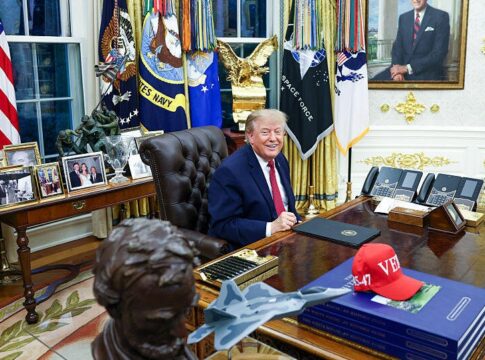
President Trump signed a proclamation Thursday designating the Oval Office and Cabinet Room as a national monument, marking his first official action following his party’s defeat in Tuesday’s midterm elections. The move aims to preserve his extensive gold-adorned redesign of the iconic workspace, though future presidents retain authority to reverse the designation entirely.
What the Proclamation Actually Does
The presidential order requires the Interior Secretary to manage the Oval Office as a national monument and mandates documentation and review before any substantial alterations. However, the proclamation explicitly permits future presidents to redecorate, select furnishings, and make security modifications that don’t substantially impair the historic structure. Trump claimed major changes would require Congressional approval, though this requirement appears nowhere in the actual document text.
Trump described the action in sweeping terms, insisting the office cannot be touched, destroyed, or rebuilt in a different shape by what he called stupid people. The irony wasn’t lost on observers: Trump himself demolished the East Wing to construct his controversial ballroom and has previously reversed national monument designations made by predecessors. A red baseball cap reading VETO sat prominently on the Resolute Desk during the signing ceremony.

Trump’s Extensive Renovations Under Scrutiny
Since returning to the White House, Trump has overseen dramatic design changes throughout the presidential residence. The Oval Office now features wall-to-wall portraits, a copy of the Declaration of Independence, numerous golden accents, gold wall appliques, and gold-framed artwork. Trump also installed new chandeliers in the Cabinet Room to address what he called very bad lighting conditions.
These beautification projects face legal challenges. Several lawsuits allege Trump’s Washington renovation projects proceeded without necessary approvals. Connecticut Senator Richard Blumenthal, leading Democrat on the Homeland Security investigations subcommittee, sent letters Thursday demanding information from known ballroom donors, threatening alternative compliance measures. A federal judge is currently considering whether to block construction of one Trump architectural project.
Political Timing and Future Implications
The proclamation’s timing following the midterm losses signals Trump’s awareness of shifting political winds. With Democrats preparing increased oversight, the monument designation appears designed to cement Trump’s aesthetic legacy regardless of who occupies the office next. Trump dramatically promised to return from wherever he might be to prevent anyone from knocking down walls, though the proclamation provides no enforcement mechanism for such intervention.
The National Capital Planning Commission, populated with Trump allies, previously voted 8-4 to approve related projects after nine hours of public testimony. Constitutional scholars note presidents possess broad authority over White House operations, making Trump’s proclamation largely symbolic rather than legally binding on successors.