
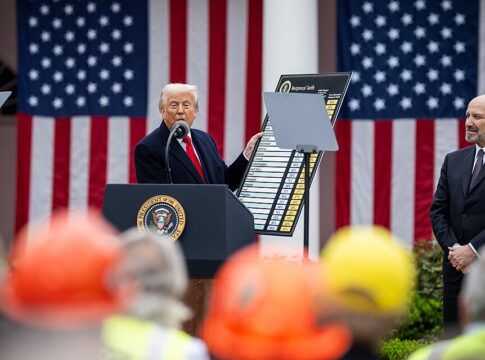
President Trump signed a proclamation Thursday imposing tariffs as high as 100% on certain foreign drones, citing critical national security vulnerabilities and America’s dangerous dependence on unreliable foreign supply chains for essential defense technology.
Targeting High-Risk Foreign Drones
The new tariffs impose a 100% levy on drones exceeding 55 pounds maximum takeoff weight and those equipped with thermal imaging capabilities. Docking stations and critical components for these advanced systems face the same penalty. Commerce Secretary Howard Lutnick conducted the investigation that led to the tariffs after Trump ordered a comprehensive review of how imported drones threaten American security interests.
Smaller imported drones will face a 25% tariff when the policy takes effect. The proclamation creates different rates for allied nations, with European Union, Japan, South Korea, Switzerland, Taiwan, and Liechtenstein facing 15% tariffs, while United Kingdom imports receive a 10% rate. The administration structured these tiers to reflect varying security relationships while still encouraging domestic production across all categories.
Foreign Dependence Threatens National Defense
Lutnick’s report found that foreign producers dominate the American drone market, creating substantial import penetration that leaves the United States vulnerable. The Commerce Secretary determined that reliance on imported unmanned aerial systems poses significant cybersecurity risks through dependence on foreign entities, some of which represent direct security threats. The investigation revealed that certain foreign manufacturers embed vulnerabilities that could compromise American military and civilian operations.
Trump’s proclamation warns that current domestic production capacity cannot meet national security needs at the speed and scale required during wartime, armed conflict, or sustained operations. The administration expressed concerns about America’s ability to surge production when needed most, a weakness that adversaries could exploit during crisis situations. Unfair foreign trade practices have discouraged American manufacturers from investing in expanded drone production facilities, further weakening the industrial base.
What This Means
The tariffs on security-sensitive drones take effect in 21 days, while levies on less critical systems begin in 180 days, giving American manufacturers time to expand capacity. The policy aims to rebuild domestic drone production infrastructure while reducing dependence on foreign supply chains that carry cybersecurity vulnerabilities. Trump argues the tariffs will incentivize American investment in drone technology, creating jobs while strengthening national defense capabilities against foreign adversaries who currently dominate this critical sector.