
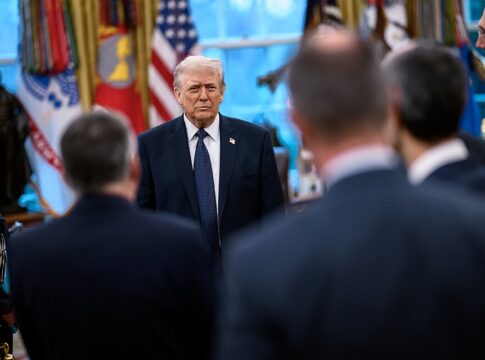
President Trump’s signature cryptocurrency legislation collapsed in the Senate on Tuesday after both Democrats and key Republicans united to defeat the regulatory package, dealing a fatal blow to the administration’s effort to mainstream digital currency regulation.
Fatal Floor Vote Ends Year-Long Effort
The Clarity Act failed a critical procedural vote despite last-minute negotiations that stretched until moments before the roll call. Senator Cynthia Lummis of Wyoming, who spent over a year crafting the legislation and incorporated more than 120 requested changes, declared the effort finished. When asked whether the bill would return to the Senate floor, Lummis responded with a definitive no, citing exhaustion with endless revisions.
Three Republicans broke ranks to join Democrats in opposition. Senators Susan Collins of Maine, Josh Hawley of Missouri, and Jerry Moran of Kansas maintained concerns that midnight-hour amendments failed to address. With midterm elections approaching and the Senate calendar crowded with competing priorities, supporters acknowledged the bill’s window had closed.
Ethics Concerns Sink Bipartisan Deal
Democratic opposition centered on ethics provisions regarding the Trump family’s expanding cryptocurrency holdings. The president’s income surged 250 percent between 2024 and 2025, jumping from $620 million to $2.2 billion, with much of the increase attributed to crypto ventures managed by sons Don Junior and Eric. Senator Cory Booker of New Jersey framed his opposition simply, stating the bill would allow presidential corruption to continue unchecked.
Senator Ruben Gallego of Arizona revealed that negotiations with Republican Senator Thom Tillis of North Carolina on strengthened ethics language nearly succeeded. Banking committee staff from Senator Tim Scott’s office abruptly ended discussions at the final moment, preventing a potential compromise that could have secured passage. Gallego accused Republicans of prioritizing presidential financial interests over sound digital currency policy.
Security and Banking Concerns Remain
Beyond ethics disputes, senators raised questions about money laundering protections and community banking impacts. Senator Andy Kim of New Jersey cited insufficient safeguards against terrorist and cartel financing as his reason for opposition. Senator John Cornyn of Texas worried about effects on deposit yields at community banks and criminal misuse, though he argued the chamber should advance the bill for further refinement through the amendment process.
Traitors