
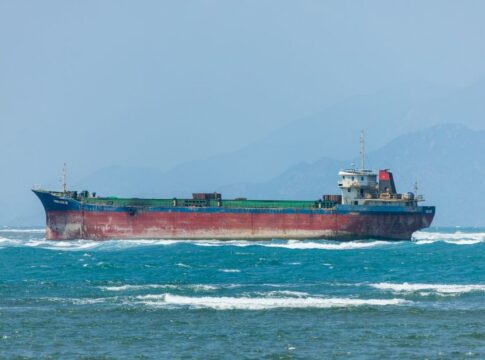
The Trump administration is dusting off a 400-year-old maritime law that would allow the U.S. military to bypass modern legal procedures and directly seize Iranian oil tankers, creating what legal experts warn could trigger significant international consequences.
Ancient Naval Warfare Doctrine Returns
Prize law, a maritime legal framework dating to the early 1600s, establishes how captured enemy vessels and cargo are condemned, returned, or disposed of during military conflicts. Aaron Reitz, U.S. attorney for the Southern District of Texas, confirmed the Justice Department is preparing federal courts to adjudicate these cases. The centuries-old statute allows the government to circumvent civil asset forfeiture laws, which frequently face lengthy court battles, in favor of a streamlined process requiring only that a judge determine the U.S. met specific legal standards.
Under the 1789 federal law, district courts gain jurisdiction over prize cases once the military seizes vessels. The Justice Department and Pentagon must establish that seized boats carry contraband, transport enemy soldiers, operate under enemy control, use fraudulent documents, or attempt to break a blockade. Any captured vessel would need physical relocation to U.S. territory, potentially the port of Houston, for judicial proceedings.
Historical Precedent and Modern Concerns
Michael Sturley, a maritime law professor at the University of Texas School of Law, explained that prize courts played enormous roles during the Revolutionary War and War of 1812. The government issued letters to private citizens authorizing them to harass enemy shipping, with captors keeping seized property as incentive. Those privateers split prizes between the government and ship crews who captured belligerent vessels.
Ian Ralby, president of maritime security nonprofit Auxilium Worldwide, sees no inherent problem reviving capture and prize law, noting that blockade law and contraband doctrines have already returned from dormancy. However, he identifies serious domestic and international legal challenges, particularly regarding Middle Eastern and South American operations where the administration has already seized Iranian and Venezuelan-linked tankers.
Legal Contradictions Emerge
The administration faces consistency problems in articulating its actual objectives, according to Ralby. Officials have simultaneously claimed sanctions enforcement, a peacetime construct, and blockade enforcement, a naval warfare doctrine. These two legal frameworks cannot coexist under international law. The contradictory positions reflect broader reversals in President Trump’s military and economic stances toward ongoing Iranian conflicts, creating confusion about whether the United States considers itself at war or enforcing civilian economic sanctions against Tehran.
Sources
Cbsnews: Trump administration reviving centuries-old prize law to try to claim Iranian oil tankers
WORKS FOR ME!!! GRAB THEM AND BRING THE TANKERS TO THE USA SO WE CAN USE THEM TO EXPORT OIL!!!
The centuries-old statute allows the government to circumvent civil asset forfeiture laws,
That is a FALSE statement. Civil asset forfeiture laws NEVER applied to seagoing vessels. You may as well say self defense allows private individuals to circumvent theft laws.