
The Trump administration announced a proposed rule Monday requiring food manufacturers to notify the FDA when they classify additives as safe, but public health experts warn the measure leaves a critical loophole untouched that has allowed thousands of unstudied chemicals into America’s food supply for decades.
The Notification Requirement
Under the proposed regulation, companies must inform the Food and Drug Administration when they designate additives as “generally recognized as safe” or GRAS, and provide data on existing additives. The notices would become public records. However, manufacturers retain the authority to self-certify ingredient safety without FDA pre-approval, and the rule establishes no timeline requiring notification before introducing new substances into food products.
“The new rule does not prevent companies from self-affirming the safety of their ingredients,” said Alyssa Moran, deputy director of the Center for Food and Nutrition Policy at the University of Pennsylvania. “Companies can introduce these ingredients and then eventually notify FDA.” Moran called the claim of closing the GRAS loophole misleading when companies maintain self-certification authority.
Decades-Old System Under Fire
The GRAS designation originated in the 1950s to streamline approval for common ingredients like paprika and vanilla while conserving FDA resources. Companies currently operate under no obligation to inform the FDA when classifying substances as GRAS. Public health experts argue the food industry has exploited this framework to introduce potentially dangerous chemicals without adequate testing or public transparency.
The FDA has banned certain GRAS-designated ingredients after health concerns emerged, including Red No. 3, a synthetic dye linked to cancer in animals, and brominated vegetable oil, associated with liver, heart and brain damage. Dr. Dariush Mozaffarian, director of the Food Is Medicine Institute at Tufts University, said the exemption has become a loophole allowing substances into the food supply without public disclosure or safety information.
What Comes Next
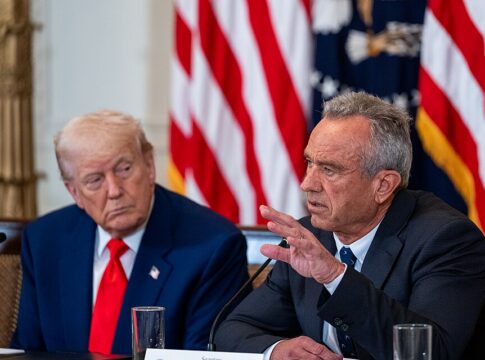
Jennifer Pomeranz, associate professor at New York University School of Global Public Health, called the proposal an important first step but emphasized critical questions remain unanswered about what data companies must submit for ingredients already in use. The Food Industry Association acknowledged the proposal’s limitations, urging Congress to establish a nationally uniform framework that strengthens FDA authority while preventing a fragmented state-by-state regulatory patchwork. Health Secretary Robert F. Kennedy Jr. participated in a media event Monday announcing the proposed rule.