
Supply Chain Disruptions: Why Shortages Happen Today
By Newsroom, Business Desk — Published August 10, 2026
Table of Contents
- How Supply Chain Disruptions Cascade Through the Economy
- The Structural Vulnerabilities That Enable Shortages
- Why Recovery Takes Longer Than Disruption
- The Real Estate and Investment Dimensions
- Consumer Behavior and Retail Adaptation
- Frequently Asked Questions
When shelves sit empty or delivery dates stretch weeks into the future, supply chain disruptions have moved from boardroom jargon to household frustration. These breakdowns ripple through the entire economy, driving inflation data upward, dampening GDP growth rate projections, and forcing central banks into difficult interest rate decisions. Understanding why goods fail to reach consumers when needed requires looking beyond simple explanations of “shipping problems” to see how modern commerce actually functions—and where it breaks.
The global supply chain operates as an intricate web connecting raw material extraction, manufacturing, warehousing, transportation, and final delivery. When any link weakens, consequences spread fast. A semiconductor shortage halts automobile production. Port congestion delays quarterly earnings reports as inventory sits offshore. These aren’t isolated incidents but symptoms of systemic vulnerabilities built into how we produce and distribute goods.
How Supply Chain Disruptions Cascade Through the Economy
Supply chains today prioritize efficiency over resilience. Manufacturers adopted “just-in-time” inventory strategies to reduce warehousing costs, keeping minimal stock on hand and relying on predictable delivery schedules. This works beautifully when conditions remain stable. It fails spectacularly when they don’t.
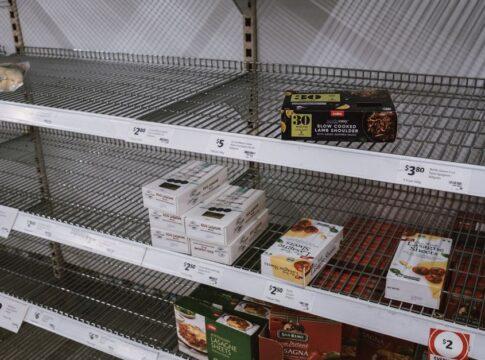
Consider how a single disruption multiplies. A factory closure in one country means component shortages for assemblers in another. Those assemblers can’t fulfill orders, so retailers face empty shelves. Consumers delay purchases or switch brands. Stock market volatility follows as companies revise earnings guidance downward. The Federal Reserve watches inflation data tick upward as scarcity drives prices higher, complicating decisions about monetary policy.
The financial impacts extend beyond consumer inconvenience. Companies report lower quarterly earnings when they can’t source materials or ship finished products. Trade deficit numbers shift as imports slow or reroute through different ports. Venture capital funding flows toward logistics technology startups promising to solve these problems. Meanwhile, unemployment statistics reflect both labor shortages in transportation sectors and layoffs in industries starved for components.
The Structural Vulnerabilities That Enable Shortages
Modern supply chains concentrate production geographically to exploit cost advantages. Roughly three-quarters of certain electronics components come from a handful of factories in East Asia. When weather, politics, or health crises affect those regions, alternatives don’t exist at scale. Diversification costs money upfront, so companies avoided it—until disruption costs proved higher.
Transportation networks create additional bottlenecks. Shipping containers must move in precise choreography: unloaded at ports, transported inland, emptied, and returned for the next voyage. Break that rhythm, and containers pile up in wrong locations. Trucking faces driver shortages that predate recent crises, meaning goods sit waiting even when ports clear. Rail capacity constraints and warehouse space limitations compound the problem.
Information gaps make coordination difficult. A manufacturer might not know their supplier’s supplier faces problems until shortages hit. Visibility typically extends one tier deep in most supply chains. This opacity prevents early intervention and forces reactive rather than proactive management.
Key Pressure Points
- Port capacity and efficiency, where ships wait days or weeks to unload
- Container availability and positioning, creating equipment shortages even when vessels exist
- Warehouse space near consumption centers, limiting inventory buffers
- Specialized component production concentrated in few facilities
- Transportation labor shortages across trucking, rail, and maritime sectors
- Customs and regulatory processing that slows cross-border movement
Why Recovery Takes Longer Than Disruption
Supply chains break quickly but heal slowly. A port closure stops shipments immediately. Reopening that port doesn’t instantly clear the backlog. Ships already rerouted to other facilities create congestion there. Containers sit out of position. Warehouses overflow with late-arriving goods while retailers already adjusted orders downward.
This lag effect confuses policy responses. By the time inflation data reflects supply shortages, the underlying disruption may be resolving—but price increases persist as businesses recoup losses. Interest rate decisions made to combat inflation can overshoot if supply recovery isn’t factored in. The Federal Reserve must distinguish between demand-driven price increases and supply-constrained shortages, which require different remedies.
Employment trends show similar delays. Industries hire aggressively during disruptions to add capacity, then face overcapacity as conditions normalize. Unemployment statistics lag both the crisis and the recovery, making real-time assessment difficult for policymakers.
The Real Estate and Investment Dimensions
Supply chain concerns reshaped real estate markets. Warehouse space near major metros became premium property as companies sought to hold more inventory closer to consumers. Industrial real estate investment trusts saw strong performance while retail spaces struggled. This shift affects local tax bases, zoning decisions, and development patterns in ways that outlast individual disruptions.
Corporate strategy shifted toward vertical integration and domestic sourcing. Mergers and acquisitions activity increased in logistics sectors as companies bought capability rather than contracting it. Venture capital funding poured into supply chain software, autonomous vehicles, and alternative transportation methods. These investments create long-term structural changes even if immediate shortages ease.
Consumer Behavior and Retail Adaptation
Shortages trained consumers to buy earlier and stock up when items appear, creating demand surges that worsen scarcity. Retail trends shifted toward pre-orders and waitlists for everything from appliances to automobiles. Consumer spending patterns changed as households substituted available goods for preferred ones, sometimes permanently altering brand loyalties and product categories.
Retailers responded by holding more inventory despite higher costs, reversing decades of just-in-time optimization. This increases resilience but reduces profitability. The trade-off between efficiency and reliability now tilts toward reliability, with lasting implications for how businesses operate and what margins they accept.
Frequently Asked Questions
Why can’t companies just make more to solve shortages?
Production capacity takes years to build and requires enormous capital investment. A semiconductor fabrication plant costs billions of dollars and needs three to five years from groundbreaking to production. Even simpler manufacturing faces equipment lead times, workforce training requirements, and regulatory approvals. Companies won’t invest in capacity that might sit idle once temporary disruptions resolve, creating a collective action problem where everyone waits for someone else to add capacity.
How do supply chain problems affect inflation differently than other causes?
Supply-driven inflation stems from scarcity rather than excess demand. Traditional tools like interest rate increases can reduce demand but don’t fix broken supply chains—they may even worsen shortages by discouraging investment in new capacity. Supply chain inflation tends to be “stickier” because fixing underlying problems takes time, meaning prices stay elevated longer. This complicates central bank policy since the standard playbook assumes demand-side causes.
Are supply chains more fragile now than in the past?
Modern supply chains are simultaneously more efficient and more fragile. Globalization and optimization removed redundancy that once provided buffers. Historical supply chains held more inventory, used more suppliers, and moved goods more slowly—all factors that absorbed shocks better but cost more. Today’s networks deliver lower prices and faster service under normal conditions but fail more dramatically under stress. The question isn’t whether they’re more fragile but whether we accepted fragility unknowingly in exchange for efficiency.
What role does consumer demand play in creating shortages?
Demand surges overwhelm even healthy supply chains when unexpected. Panic buying, stockpiling, and rapid shifts between product categories create artificial scarcity that compounds genuine supply problems. Online shopping concentrates demand in ways physical retail didn’t, creating sudden spikes that distribution networks can’t absorb. Consumer behavior during disruptions often makes shortages worse and longer-lasting, though individuals acting rationally to secure goods create collectively irrational outcomes.
Supply chain disruptions reveal how much modern life depends on goods flowing smoothly across vast distances and through countless handoffs. The systems delivering products to our doors were optimized for a stability that no longer exists. Rebuilding for resilience rather than pure efficiency means accepting higher costs and slower delivery under normal conditions to avoid catastrophic failures during crises. That’s a trade-off worth understanding as both consumers and citizens, because the choices businesses and policymakers make now will shape how reliably goods reach us for years to come.