
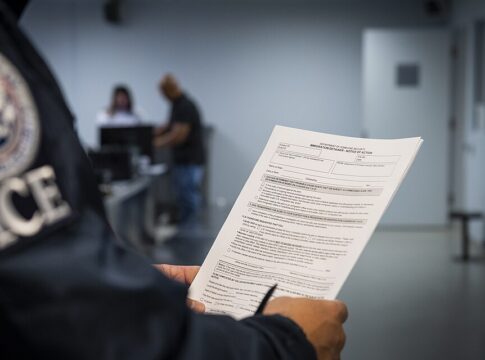
Immigration and Customs Enforcement has stopped revealing the locations of thousands of detainees subject to final deportation orders, making it nearly impossible for lawyers and family members to find them in a move that fundamentally changes how America’s immigration system operates.
Detainees Vanish From Federal Database
ICE removed detainees with final removal orders from its online locator system on September 15, according to three current and former agency officials who spoke anonymously. Multiple immigration attorneys confirmed their clients disappeared from the database without warning this week. The American Immigration Lawyers Association issued an urgent alert to members on Friday after discovering the change. The agency has not publicly announced the policy shift or explained its rationale for implementing it.
Nearly 16,000 people arrested and booked into ICE detention during July alone were subject to final removal orders, representing more than one-third of all bookings that month, according to data from the Deportation Data Project at U.C. Berkeley and UCLA. With ICE facilities holding over 65,000 people as of early July, approximately 30 percent likely have final removal orders, meaning roughly 20,000 detainees now cannot be located through the public system.
Legal Access Severely Restricted
The change does not apply to facilities in Adelanto, California, or temporary holding sites in Minneapolis, New York City, and suburban Chicago, where court orders require ICE to list detainees promptly. Greg Chen, senior director of government relations at the American Immigration Lawyers Association, said families are panicking because they believe loved ones have already been deported. Attorneys cannot contact clients to discuss legal options or file paperwork for appeals.
Detainees with final removal orders retain several legal pathways to challenge deportation, including motions to reopen cases and habeas corpus petitions seeking release on constitutional grounds. Federal judges have granted thousands of such rulings ordering detainee releases or bond hearings. The database blackout could accelerate deportations by making last-minute legal challenges significantly harder to pursue, immigration lawyers warned.
What This Means
The Department of Homeland Security argues people with final removal orders have received full due process through immigration court hearings and appeals. ICE stated in a written response that detainees with final orders are prioritized for deportation despite facing a historic number of court injunctions blocking individual removals. The practice represents a dramatic shift from previous transparency standards and reflects the administration’s hardline approach to immigration enforcement, raising constitutional questions about access to legal counsel and due process rights.
Sources
Wsbtv: AP Exclusive: ICE hides locations of thousands of detainees with final removal orders