
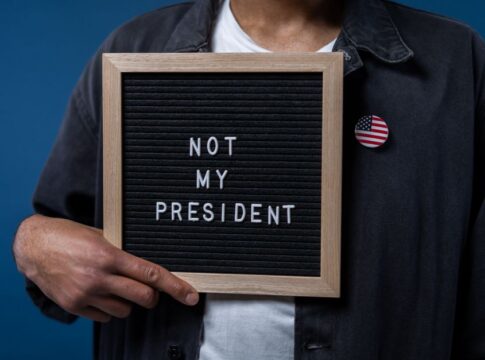
Photo: cottonbro studio / Pexels
By Daily American Press Newsroom, Politics Desk — Published November 5, 2026
Table of Contents
- Key Takeaways
- The Background & Context
- Why This Matters
- Reactions & Analysis
- What Happens Next
- Frequently Asked Questions
The Republican Party’s performance in the midterm elections fell dramatically short of expectations, delivering what political observers are calling a historic rebuke to the party’s strategy and messaging. When five republicans lost key races that were supposed to be safe pickups, the GOP’s anticipated “red wave” never materialized, leaving party leaders scrambling to explain what went wrong and how a political landscape that seemed primed for massive gains turned into a series of disappointing losses across crucial battleground states.
The failure has sparked intense debate within conservative circles. Fox News host Jesse Watters characterized the outcome bluntly, saying the GOP coalition had “totally collapsed.” Political analysts point to a combination of strategic missteps, messaging failures, and a refusal to acknowledge electoral realities that together created what some are calling a perfect recipe for underperformance in races from Congress to state legislatures.
This electoral setback carries profound implications for American politics, the legislative agenda, and the direction of the Republican Party itself. Understanding why the party stumbled so badly matters not just for political insiders but for every voter trying to make sense of our democracy’s direction.
Key Takeaways
- The Republican Party experienced a significant electoral underperformance that defied pre-election polling and historical patterns favoring the opposition party during midterms.
- Political commentators, including prominent conservative voices, acknowledged that the GOP coalition suffered a major breakdown in organization and appeal.
- Strategic missteps by Republican campaign operatives and candidates laid groundwork for losses in races the party expected to win easily.
- The MAGA wing’s influence on candidate selection and messaging contributed to electoral failures, according to multiple political analyses.
- The party’s inability to acknowledge certain political realities hampered its ability to connect with moderate and independent voters crucial to winning swing districts.
- The losses have triggered internal Republican debates about future direction, candidate quality, and campaign strategy heading into the next election cycle.
The Background & Context
Midterm elections typically favor the party out of power. History shows that the president’s party almost always loses congressional seats two years into a term. With inflation running high, gas prices elevated, and presidential approval ratings underwater, Republicans had every reason to expect significant gains.
The party needed to flip just five seats to reclaim the House of Representatives. In the Senate, retirements and competitive races in states that had voted for Donald Trump seemed to offer clear pathways to a majority. Governors’ mansions in key swing states appeared vulnerable. Republican strategists openly discussed not just winning but winning big.
Yet as results rolled in on election night, that optimism evaporated. Close races broke toward Democrats. Anticipated pickups didn’t materialize. Senate candidates who had cruised through primaries struggled in general elections. The disconnect between expectation and reality was jarring.
The Republican missteps that laid the groundwork for this historic midterm rebuke began months earlier, during primary season. Candidate selection processes that prioritized loyalty to former President Trump over electability produced nominees who struggled to appeal beyond the party’s base. In several high-profile races, more moderate Republicans who might have performed better in general elections lost primaries to candidates favored by the MAGA movement.
Campaign messaging also proved problematic. While Republicans focused heavily on certain cultural issues and relitigating past grievances, exit polls suggested voters were more concerned with concrete policy solutions to economic challenges. The gap between what candidates emphasized and what persuadable voters wanted to hear created a fundamental disconnect.
Why This Matters
For ordinary Americans, these electoral outcomes have direct consequences. The balance of power in Congress determines which legislation passes, which judicial nominees get confirmed, and how effectively the government can address pressing challenges from healthcare costs to infrastructure investment.
A weakened Republican showing means the party has less leverage to advance its policy priorities. It also means that predictions of legislative gridlock may not fully materialize, potentially allowing more bipartisan cooperation on select issues. Voters who cast ballots expecting their representatives to check presidential power or advance conservative legislation may find those expectations unmet.
The results also matter for democratic accountability. When one party underperforms expectations this dramatically, it signals that voters rejected something—whether specific candidates, particular messages, or broader strategic approaches. Understanding what voters rejected helps ensure the political system remains responsive to public sentiment.
Beyond immediate policy implications, the Republican performance raises questions about the party’s future direction. Internal debates about candidate quality, messaging strategy, and the influence of different factions will shape not just the next election cycle but the broader trajectory of American conservatism. These are not abstract political science questions; they affect which policies get proposed, which constituencies get prioritized, and how one of America’s two major parties engages with voters.
Reactions & Analysis
Conservative media figures offered surprisingly candid assessments of the party’s performance. Jesse Watters’ observation that the GOP coalition had “totally collapsed” reflected a broader acknowledgment among some Republican commentators that something had gone fundamentally wrong with the party’s strategy and execution.
Political analysts examining how MAGA lost the midterms pointed to a failure to acknowledge reality as a central problem. This manifested in multiple ways: underestimating the backlash to certain policy positions, overestimating the appeal of candidates selected primarily for their loyalty rather than their broader electability, and misreading which issues would motivate swing voters.
The disconnect between Republican expectations and electoral reality extended to polling interpretation. While some surveys showed tight races or even Republican advantages, the party’s internal confidence appeared to exceed what even favorable polls suggested. This overconfidence may have contributed to resource allocation decisions that left some competitive races underfunded while pouring money into races that were never truly competitive.
Democratic strategists, meanwhile, credited their own focus on concrete issues—particularly healthcare and economic security—as resonating with voters who might otherwise have been inclined to protest-vote against the party in power. They also pointed to superior ground game operations in key states, where person-to-person voter contact and turnout operations outperformed Republican equivalents.
Independent political observers noted that candidate quality mattered enormously. In several states, Republican nominees carried significant baggage—whether past controversial statements, questions about their backgrounds, or simply an inability to articulate compelling visions for governance. Democratic opponents successfully defined these candidates before they could define themselves, a classic campaign failure.
What Happens Next
The Republican Party now faces a reckoning. Internal debates about the party’s direction, already simmering, have intensified. Some party leaders argue for a return to more traditional conservative messaging focused on economic policy, fiscal responsibility, and limited government. Others maintain that the MAGA approach remains the party’s future and that the midterm problems stemmed from poor execution rather than flawed strategy.
Candidate recruitment for upcoming elections will be scrutinized far more carefully. Party officials burned by nominating candidates who couldn’t win general elections may take more active roles in primaries, though this risks backlash from base voters who resent establishment interference. Finding the balance between electability and authenticity to party principles will challenge Republican strategists.
Messaging will also evolve. The party’s post-election analysis will likely recommend greater focus on kitchen-table economic issues and less emphasis on cultural grievances that may energize the base but alienate persuadable voters. Whether candidates and party leaders heed this advice remains uncertain, particularly given the powerful incentives to cater to primary voters rather than general election audiences.
Legislative strategy in Congress will adapt to the new reality. With narrower margins than anticipated, Republican leaders will have less room for internal dissent and will need to negotiate more carefully with moderate members. This could paradoxically lead to more bipartisan legislation, as narrow majorities require broader coalitions.
Looking ahead to the presidential election cycle, these midterm results will influence which candidates emerge as frontrunners. The electoral underperformance may embolden challengers who argue the party needs a different direction, while also potentially strengthening those who can credibly claim to have outperformed expectations in their own races.
Frequently Asked Questions
What were the main reasons Republicans underperformed in the midterm elections?
Multiple factors contributed to Republican underperformance, including candidate quality issues stemming from primary processes that prioritized loyalty over electability, messaging that focused on cultural grievances rather than economic solutions voters wanted, superior Democratic ground operations in key states, and a failure to accurately assess the political landscape and voter priorities. The combination of these strategic and tactical missteps prevented the party from capitalizing on historical trends and economic conditions that typically favor the opposition party.
How did candidate selection affect Republican electoral outcomes?
Republican primary processes in several states produced nominees who struggled in general elections. Candidates selected primarily for their alignment with the MAGA movement or loyalty to former President Trump often lacked the broader appeal needed to win swing voters in competitive districts. Some carried controversial backgrounds or had made statements that opponents used effectively against them. More electable candidates who might have performed better in general elections lost primaries, leaving the party with nominees who couldn’t expand beyond the base.
What does this mean for the future direction of the Republican Party?
The electoral setback has intensified internal debates about the party’s strategic direction. Some leaders advocate returning to traditional conservative messaging focused on economic policy and fiscal responsibility, while others maintain the MAGA approach remains viable with better execution. The party faces difficult decisions about candidate recruitment, primary processes, and whether to prioritize base enthusiasm or broader electability. These choices will shape Republican competitiveness in upcoming election cycles and influence American politics more broadly.
How might these results affect legislation and governance?
With narrower congressional majorities than anticipated, Republicans have less leverage to advance partisan priorities and must negotiate more carefully with moderate members. This could lead to increased bipartisan cooperation on select issues where compromise is possible. The results also affect the balance of power between Congress and the executive branch, influencing which policies can advance and which judicial nominees get confirmed. Voters who expected dramatic shifts in legislative direction may find changes more incremental than anticipated.
The Republican electoral underperformance serves as a reminder that in American democracy, assumptions and expectations matter far less than actual votes. As both parties analyze these results and adjust their strategies, voters will ultimately judge whether the lessons learned translate into better governance and more responsive representation. The path forward remains uncertain, but the consequences of these choices will echo through American politics for years to come.