
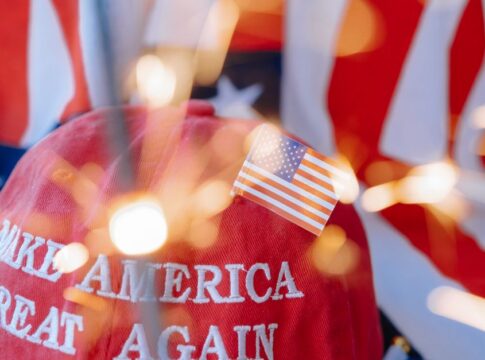
Photo: Polina Zimmerman / Pexels
By National News Daily Newsroom, Politics Desk — Published November 5, 2026
Table of Contents
- Key Takeaways
- The Background & Context
- Why This Matters
- Reactions & Analysis
- What Happens Next
- Frequently Asked Questions
Former President Donald Trump has declared in a recent interview that he is willing to accept the results of midterm elections, according to multiple news reports. The statement, reported by The New York Times, marks a notable public commitment from Trump, whose refusal to accept the 2020 presidential election outcome sparked a constitutional crisis and culminated in the January 6, 2021, Capitol riot. Trump says interview remarks signal a shift in rhetoric as the nation prepares for critical congressional contests that will determine control of both chambers and shape the legislative agenda for the remainder of President Biden’s term.
The announcement comes at a pivotal moment in American politics. Midterm elections traditionally serve as a referendum on the sitting president’s performance, and control of Congress hangs in the balance. Trump’s willingness to accept results—at least in public statements—could ease concerns among election officials, voters, and lawmakers who worry about challenges to democratic processes. Yet skepticism remains high given the former president’s track record and his continued influence over Republican campaign messaging nationwide.
The timing of this commitment raises questions about Trump’s political calculations. With dozens of Trump-endorsed candidates competing in races across the country, the former president’s acceptance of results may depend on whether those candidates win or lose. His statement offers no specifics about what conditions might govern his acceptance or whether he would challenge outcomes he considers suspicious.
Key Takeaways
- Donald Trump stated in an interview with The New York Times that he is willing to accept midterm election results, a departure from his 2020 election denials.
- The commitment comes as voters prepare for congressional elections that will determine control of the House and Senate.
- Trump’s history of challenging election outcomes has raised concerns about democratic stability and the peaceful transfer of power.
- Multiple news organizations, including Reuters and U.S. News & World Report, confirmed the interview remarks about accepting midterm results.
- The statement provides no detail about conditions or circumstances under which Trump might challenge results he disputes.
- Trump-endorsed candidates are running in numerous competitive races, making the former president’s influence a central factor in Republican campaign strategy.
The Background & Context
Donald Trump’s relationship with election results has become one of the defining issues of contemporary American politics. After losing the 2020 presidential election to Joe Biden by more than seven million popular votes and 74 electoral votes, Trump refused to concede. He launched dozens of legal challenges, nearly all of which failed in court. He pressured state officials to overturn results. He organized rallies claiming the election was stolen.
The culmination came on January 6, 2021, when a mob of Trump supporters stormed the U.S. Capitol in an attempt to prevent Congress from certifying Biden’s victory. Five people died in connection with the violence. More than 140 police officers were injured. The attack represented the most serious assault on American democratic institutions in generations.
Since then, Trump has continued to claim without evidence that the 2020 election was fraudulent. His insistence has reshaped Republican politics. Candidates who question the 2020 results have won primaries across the country. Election denial has become a litmus test in many Republican circles. State legislatures have passed new voting restrictions justified by concerns about election integrity—concerns experts say are unfounded.
The impact extends beyond rhetoric. Election officials have faced death threats. Poll workers have quit. Faith in democratic institutions has eroded. Surveys show a significant portion of Republican voters believe the 2020 election was stolen, despite no credible evidence supporting that claim. The consequences for civic life and political stability are profound.
Against this backdrop, Trump’s statement about accepting midterm results carries weight. It suggests at least a tactical recognition that blanket rejection of electoral outcomes damages his political standing and complicates governance. Yet the absence of detail leaves open the possibility of selective acceptance—embracing results when his endorsed candidates win while challenging outcomes he dislikes.
Why This Matters
The health of American democracy depends on the peaceful transfer of power and the acceptance of legitimate election results. When political leaders refuse to concede or baselessly challenge outcomes, they undermine public confidence in the electoral system. This erosion of trust has real consequences for governance, civic engagement, and social cohesion.
For voters, Trump’s commitment matters because it may reduce the likelihood of post-election chaos. If losing candidates accept results, the transition process can proceed smoothly. Election officials can certify votes without facing pressure campaigns. Congress can seat new members without controversy. The legislative process can begin without clouds of illegitimacy hanging over newly elected representatives.
For election administrators, the statement offers a measure of relief. These officials have worked under extraordinary stress since 2020, facing harassment and threats while trying to conduct fair elections. A commitment from the most influential Republican figure to accept results could ease tensions and allow professionals to do their jobs without fear of violence or intimidation.
For the Republican Party, Trump’s position creates both opportunities and challenges. On one hand, it may help moderate candidates appeal to swing voters concerned about democratic stability. On the other hand, it may disappoint the party’s base, many of whom remain convinced that elections are rigged. Navigating this tension will define Republican strategy in the coming months.
The stakes extend to legislation and policy. Control of Congress determines which bills reach the floor, which nominees get confirmed, and which investigations proceed. If election results are contested, the entire legislative agenda stalls. Budgets go unpassed. Confirmations languish. The machinery of government grinds to a halt. Accepting results, by contrast, allows the winners to govern and the losers to regroup for the next campaign.
Reactions & Analysis
Political observers have responded to Trump’s statement with a mixture of cautious optimism and deep skepticism. Some see it as a positive development—a sign that even Trump recognizes the damage caused by election denial. Others view it as a tactical maneuver designed to preempt criticism while leaving room for future challenges if results disappoint him.
Democrats have noted that Trump’s commitment comes with no specifics. He has not renounced his false claims about 2020. He has not apologized for the January 6 attack. He has not acknowledged that his challenges to the last election were baseless. Without these admissions, critics argue, his promise to accept midterm results rings hollow.
Within Republican circles, reactions vary. Some establishment figures welcome the statement as a return to normalcy and a chance to move past the controversies of the last two years. Others in the party’s populist wing remain committed to election denial and may see Trump’s remarks as a betrayal of their beliefs.
Legal experts have pointed out that accepting election results should not be newsworthy—it should be the baseline expectation for any candidate or political leader. The fact that Trump’s statement generates headlines reflects how far American political norms have deteriorated. What was once taken for granted now requires explicit affirmation.
Historians draw parallels to other moments when democratic institutions faced stress. The peaceful transfer of power has been a hallmark of American democracy since its founding. Moments when that tradition was threatened—such as the disputed 1876 election—left lasting scars. The current crisis, they argue, will shape American politics for decades.
What Happens Next
The true test of Trump’s commitment will come on election night and in the days that follow. If Republican candidates win control of Congress, accepting results will be easy. If Democrats retain power or if races are close, Trump’s response will reveal whether his statement was genuine or merely convenient.
Election officials are preparing for multiple scenarios. They have trained staff on security procedures. They have coordinated with law enforcement. They have established clear protocols for vote counting and certification. These preparations reflect lessons learned from 2020 and a determination to conduct elections professionally regardless of political pressure.
Congress will play a critical role in certifying results and seating new members. Reforms to the Electoral Count Act, passed in response to January 6, clarify procedures and raise the threshold for objections. These changes should make it harder to challenge legitimate results, but they do not eliminate the possibility of controversy.
Looking ahead, Trump’s influence over the Republican Party remains substantial. His endorsements shape primaries. His fundraising prowess finances campaigns. His rallies energize voters. Whether he runs for president again in 2024 depends partly on how midterm elections unfold and whether his endorsed candidates succeed.
For American democracy, the path forward requires rebuilding trust in electoral institutions. This work involves multiple stakeholders: election officials conducting transparent processes, candidates accepting legitimate outcomes, media outlets reporting accurately, and citizens engaging constructively. Trump’s statement, if honored, could be a small step in that direction.
Frequently Asked Questions
What exactly did Trump say about accepting election results?
According to reports from The New York Times and other outlets, Trump stated in an interview that he is willing to accept the results of midterm elections. The reports do not provide extensive details about conditions or qualifications attached to this commitment, leaving some ambiguity about the circumstances under which he would honor this pledge.
Why is Trump’s statement about accepting results considered significant?
Trump’s refusal to accept the 2020 presidential election results led to a constitutional crisis, culminating in the January 6 Capitol attack. His continued claims of election fraud have reshaped Republican politics and undermined public confidence in democratic institutions. A commitment to accept midterm results represents a departure from that pattern, though skeptics question whether the commitment is genuine or conditional.
How do midterm elections affect control of Congress and legislation?
Midterm elections determine which party controls the House of Representatives and Senate. The majority party sets the legislative agenda, decides which bills receive votes, and controls committee assignments and investigations. Control of Congress shapes everything from budget priorities to judicial confirmations, making these elections crucial for governance and policy direction.
What safeguards are in place to ensure election results are accepted?
Multiple safeguards protect election integrity and the acceptance of results. These include bipartisan election boards, transparent vote-counting procedures, post-election audits, judicial review of challenges, and certification processes at state and federal levels. Recent reforms to the Electoral Count Act have strengthened procedures for congressional certification of results, making frivolous challenges more difficult.
As midterm elections approach, Trump’s stated willingness to accept results offers a test of whether American political norms can recover from recent shocks. The commitment matters less for what it says than for what happens when votes are counted and winners declared. Democracy depends not on promises but on actions—on leaders who respect the will of voters even when outcomes disappoint them.